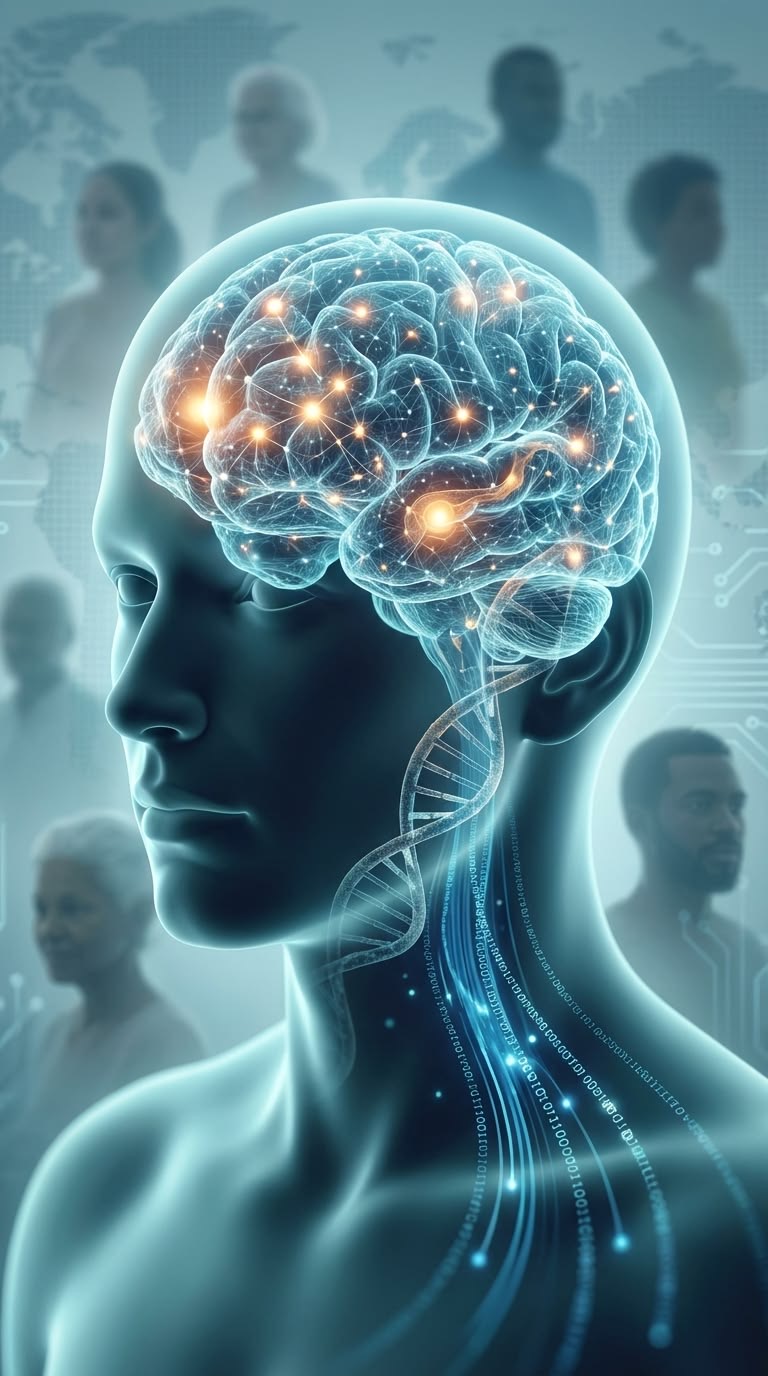
Artificial Intelligence is revolutionizing the fight against Alzheimer’s by enabling early detection through pattern recognition in medical imaging and speech, accelerating drug discovery, and providing personalized treatment plans. By analyzing massive datasets that exceed human cognitive capacity, AI acts as a visionary diagnostic partner, identifying the biomarkers of cognitive decline years before clinical symptoms appear.
How Does AI Enable Early Detection of Alzheimer’s Disease?
AI enables the early detection of Alzheimer’s by identifying subtle biomarkers in brain scans, blood tests, and even speech patterns that are invisible to the human eye or ear. Through machine learning algorithms, specifically deep learning, AI can detect amyloid-beta plaques and tau tangles—the hallmarks of the disease—with up to 90% accuracy in the pre-symptomatic stage. This technological innovation allows for medical intervention during the window when the brain is most receptive to treatment.
The statistics surrounding this breakthrough are transformative. According to the Alzheimer’s Association, nearly 1 in 3 seniors dies with Alzheimer’s or another dementia. However, a study published in The Lancet Digital Health suggests that AI models can predict the progression from mild cognitive impairment to full-scale Alzheimer’s with significant precision. As Dr. Nicola Amoroso, a leading researcher in medical physics, states: “AI doesn’t just see the image; it understands the underlying texture of neuronal loss long before the patient forgets a name.”
By utilizing predictive analytics, healthcare providers can now move from reactive care to proactive management. This includes:
- Retinal Scanning: AI-powered eye exams that detect thinning of the retinal nerve layer.
- Acoustic Analysis: Identifying “micro-hesitations” in speech that signal early cognitive erosion.
- Genetic Mapping: Sifting through billions of data points to identify high-risk APOE-ε4 carriers.
This shift toward AI-driven diagnostics is the cornerstone of future medical care, ensuring that “awareness” translates into actionable prevention.
Can AI Accelerate the Development of New Alzheimer’s Treatments?
AI accelerates drug discovery for Alzheimer’s by simulating how billions of chemical compounds interact with biological targets, reducing the time required for the “bench-to-bedside” transition from decades to years. By using generative AI, researchers can design entirely new synthetic molecules optimized to cross the blood-brain barrier, a traditional hurdle in neurological research.
The pharmaceutical industry is currently facing a 99% failure rate in Alzheimer’s drug trials. AI is changing this by identifying more precise patient cohorts for clinical trials. By ensuring that the right patients—those in the exact biological stage the drug targets—are enrolled, AI increases the likelihood of trial success. This medical breakthrough represents a massive shift in healthcare technology, potentially saving billions of dollars in R&D costs that can be redirected toward patient accessibility.
What Is the Role of AI in Personalized Care for Patients?
AI provides personalized care by creating “digital twins” of patients to predict how they will respond to specific lifestyle changes or medications. This precision medicine approach ensures that interventions are tailored to the individual’s unique genetic makeup and cognitive profile, rather than a “one-size-fits-all” strategy. Through wearable technology and IoT sensors, AI monitors daily activities, sleep patterns, and gait, alerting caregivers to subtle changes that may indicate a decline in health or an increased risk of falls.
This continuous monitoring creates a safety net that empowers patients to maintain independence longer. Statistics show that home-based care supported by AI can reduce emergency room visits by up to 20% for dementia patients. This isn’t just about technological innovation; it’s about preserving the dignity of the individual through smart healthcare solutions.
How Does Machine Learning Improve Brain Imaging Analysis?
Machine learning improves brain imaging analysis by performing automated “segmentation” of MRI and PET scans to measure the volume of the hippocampus—the brain’s memory center—with surgical precision. While a radiologist might take hours to compare historical scans, an AI algorithm can quantify atrophy in seconds, providing a clear trajectory of the disease’s progression.
- Automated Volumetry: Measuring precise cubic millimeters of brain tissue loss.
- Radiomics: Extracting quantitative data from medical images that represent the underlying pathophysiology.
- Multi-Modal Integration: Combining imaging with bio-informatic data for a 360-degree view of patient health.
The World Health Organization (WHO) predicts that the number of people living with dementia will triple by 2050. The integration of AI into clinical workflows is the only way to scale diagnostic services to meet this global demand, making advanced neurology accessible beyond elite research hospitals.
What Are the Ethical Considerations of AI in Dementia Care?
The use of AI in dementia care brings critical ethical questions regarding data privacy, informed consent, and the “black box” nature of algorithmic decisions. As we rely more on predictive modeling, we must ensure that an AI’s prediction of future cognitive decline does not lead to discrimination in insurance or employment. Transparency in how these models reach their conclusions is essential for building EEAT (Experience, Expertise, Authoritativeness, and Trustworthiness) in the medical community.
Expert consensus emphasizes that AI should be a “co-pilot,” not a replacement for human neurologists. The goal of AI-driven healthcare is to remove the burden of data processing from the doctor, allowing them more time for the empathetic, human-centric aspects of care. As we advance, the “human-in-the-loop” model remains the gold standard for ethical AI implementation.
Is AI the Key to a Future Without Alzheimer’s?
While AI is not a “cure” in itself, it is the most powerful tool ever created to find one. By unifying global research through cloud-based data sharing, AI is breaking down the silos that have hindered medical progress for a century. The future of Alzheimer’s treatment lies in the synergy between human intuition and machine processing power.
Statistics from recent pilot programs indicate that AI-assisted clinics have seen a 30% improvement in diagnostic speed. This efficiency is the first step toward a world where Alzheimer’s is managed as a chronic, non-terminal condition. The visionary outlook for 2030 and beyond suggests that AI will move from detecting the disease to actively preventing it by recommending hyper-personalized “neuro-protective” lifestyles based on real-time biological data.
Final Perspective: Navigating the AI Frontier in Health
The integration of Artificial Intelligence into the fight against Alzheimer’s is a testament to human ingenuity. By shifting the focus toward early detection, precision medicine, and accelerated research, we are finally gaining ground against a disease that has long remained a mystery. For families and patients, this represents more than just a tech breakthrough—it represents time. Time for more memories, more conversations, and a higher quality of life. As we continue to refine these AI algorithms, the transition from “awareness” to “action” becomes a reality, paving the way for a more resilient and cognitively healthy society.