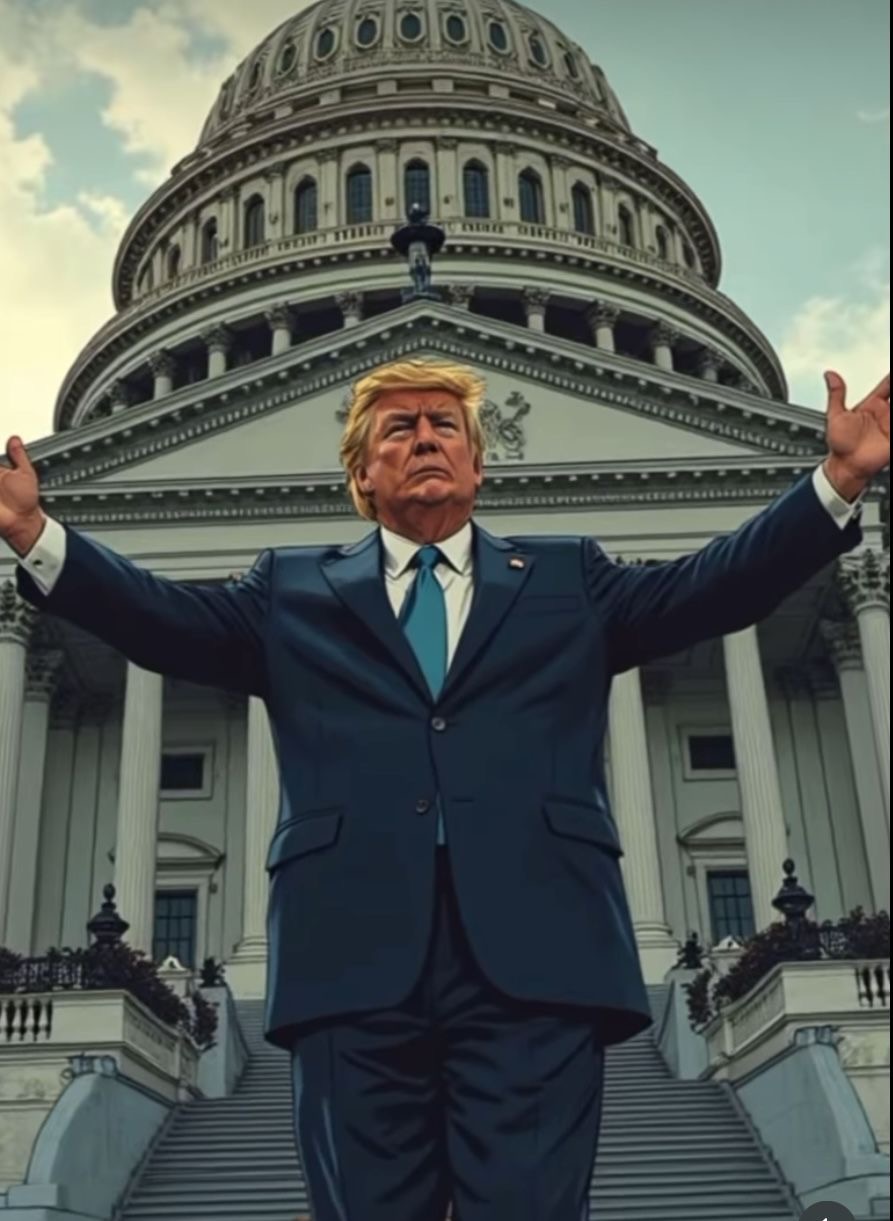
The relationship between the U.S. and the Trump administration represents a fundamental shift in the global order, moving away from decades of liberal internationalism toward a doctrine of national sovereignty and transactional diplomacy. For observers in 2026, understanding this transition is not merely a political exercise but a strategic necessity, as the “America First” framework reshapes everything from global trade routes to the security architecture of Europe and Asia.
What Defines the Economic Strategy of the Trump Administration?
The Trump administration’s economic strategy is defined by aggressive deregulation, significant tax reforms, and a protectionist trade stance aimed at reshoring manufacturing to the United States. By leveraging tariffs as a primary tool of negotiation, the administration seeks to rebalance trade deficits while stimulating domestic industrial growth through 3″energy dominance” and reduced federal oversight.
This “decoupling” from globalist norms has led to a significant shift in international trade dynamics. According to 2026 fiscal projections, the implementation of reciprocal tariffs could impact global trade volumes by as much as 12% over the next fiscal cycle. The administration argues that this friction is a necessary precursor to securing “fair and reciprocal” deals that protect American labor markets. The logic is simple: the American consumer market is the world’s most valuable asset, and access to it should come at a price that benefits the American worker.
“We are moving away from a world of borderless commerce toward a world of national economic sovereignty, where the strength of the American consumer is used as our greatest leverage,” states a senior economic advisor within the Trump White House.
For businesses, the primary challenge lies in supply chain agility. The ability to pivot manufacturing bases or navigate complex tariff schedules has become a competitive necessity. As the U.S. government incentivizes the “onshoring” of critical technologies, we are seeing a massive reallocation of capital into domestic semiconductors and green energy infrastructure—not necessarily for environmental reasons, but for national security and energy independence.
How Does the Trump Administration Impact NATO and Global Alliances?
The Trump administration impacts global alliances by demanding higher defense spending from partners and questioning the traditional cost-sharing models of organizations like NATO. This approach emphasizes “burden sharing,” where the U.S. government conditions its security guarantees on the financial and military contributions of its allies, moving toward a “pay-for-protection” model.
This shift has prompted a massive re-evaluation of defense strategies in Europe and the Indo-Pacific. Statistical data from 2025 indicates that for the first time in history, over 20 NATO members have met or exceeded the 2% GDP spending target, largely in response to pressure from Washington.
- Bilateralism Over Multilateralism: The administration prefers direct, one-on-one negotiations with nations like Poland or Japan over broad, multi-nation treaties.
- Strategic Autonomy: European leaders are increasingly pushing for “strategic autonomy,” developing independent military capabilities to mitigate the risk of a potential U.S. withdrawal from key theaters.
What Are the Key Domestic Policy Priorities of the U.S. Government?
Key domestic policy priorities under the Trump administration center on border security, energy independence through expanded fossil fuel production, and a comprehensive overhaul of the federal bureaucracy. These initiatives are designed to reduce the “administrative state” and transfer more power to the executive branch, effectively streamlining the implementation of U.S. policy.
The push for energy dominance is a cornerstone of this domestic agenda. By rolling back environmental restrictions and fast-tracking drilling permits on federal lands, the administration aims to lower domestic energy costs, which serves as a hidden stimulus for the manufacturing sector. Recent data suggests that U.S. crude oil production reached a record high in early 2026, further distancing the nation from reliance on OPEC+ supply chains. This “energy-first” approach is not just an economic policy; it is a geopolitical weapon that allows the U.S. to exert pressure on energy-dependent rivals while supporting allies with American LNG exports.
Furthermore, the administration’s focus on “Schedule F” reclassifications for civil servants aims to make thousands of federal employees “at-will,” ensuring that the bureaucracy is aligned with the President’s vision. This is a visionary, albeit controversial, attempt to ensure that the executive branch functions with the efficiency of a private corporation rather than a stagnant institution.
Why Is the “America First” Doctrine Reshaping International Diplomacy?
The “America First” doctrine reshapes international diplomacy by replacing long-standing diplomatic norms with a transactional approach focused on tangible national gains. This means that U.S. foreign policy is no longer viewed through the lens of ideological promotion or “spreading democracy,” but through the lens of economic and security reciprocity.
In the 2026 geopolitical climate, this has led to a “reset” in relations with both rivals and partners. The administration’s willingness to bypass traditional diplomatic channels in favor of high-stakes summits has created a volatile but potentially high-reward environment. For the Department of State, this has meant a shift toward “economic diplomacy,” where trade access and investment are used as primary incentives for geopolitical cooperation.
“Alliances are not charities; they are mutual security agreements. If the benefit is one-sided, the agreement is obsolete,” noted a former National Security Advisor during a 2025 policy forum.
This pragmatic realism often clashes with the established “rules-based order,” but proponents argue it reflects the reality of a multipolar world where other powers, such as China and Russia, have already abandoned those rules. By acting as a “disruptor,” the U.S. government seeks to break deadlocks in long-standing conflicts, from the Middle East to the Korean Peninsula, using a combination of economic pressure and unpredictable rhetoric.
Can the U.S. Maintain Global Leadership Under a Protectionist Framework?
The U.S. can maintain global leadership under a protectionist framework if it successfully leverages its massive internal market and technological edge to remain the world’s indispensable economic hub. While protectionism often leads to friction, the sheer scale of the U.S. economy ensures that global markets must adapt to Washington’s lead.
The strategy relies on three pillars:
- Tech Hegemony: Ensuring that AI, quantum computing, and biotechnology are pioneered and controlled by American firms through strict export controls.
- Financial Power: Utilizing the U.S. dollar’s status as the global reserve currency to enforce sanctions and dictate the terms of international finance.
- Military Modernization: Moving away from “forever wars” toward a leaner, high-tech force capable of rapid projection in the Indo-Pacific.
However, the risk of a “fragmented world” remains high. If the Trump administration pushes decoupling too far, it may encourage the rise of alternative financial systems (such as those proposed by the BRICS+ nations). The goal for the administration is not isolation, but “insulation”—protecting the American core while continuing to trade with the periphery on favorable terms.
What Does the Future of U.S. Governance Look Like?
The future of U.S. governance under this administration looks increasingly centralized, with a focus on executive efficiency and the dismantling of traditional “checks and balances” within the federal bureaucracy. This represents a move toward a “Unitary Executive” model, where the President has direct control over the entire administrative apparatus.
From an investment and planning perspective, this means that U.S. policy will likely become more decisive but also more dependent on the specific leanings of the executive. For the “Awareness” stage client, the takeaway is clear: the days of predictable, incremental policy changes are over. We have entered an era of “Geopolitical Volatility as a Constant,” where the ability to interpret and react to the Trump White House’s latest move is the most valuable skill a strategist can possess.
Adapting to the Sovereign Shift
The era of the U.S. and the Trump administration is a fundamental realignment of how a superpower interacts with a globalized world. It is a world where sovereignty is the highest value and trade is a zero-sum game. Success in this environment requires a visionary outlook that anticipates shifts in U.S. government priorities before they manifest as executive orders.
The “Awareness” required today involves recognizing that the old rules of globalism have been replaced by a more competitive, transactional, and sovereignty-focused landscape. By understanding these structural changes, stakeholders can position themselves not just to survive the turbulence, but to capitalize on the new avenues of growth that emerge when the old order is dismantled.