The global transition toward electrification is no longer limited by ambition, but by the chemical blueprints of our current energy storage. As we move deeper into 2026, the reliance on traditional lithium-ion chemistry is being challenged by a wave of innovation. For those entering the awareness stage of this transition, it is vital to understand that “next-generation” isn’t a single product, but a diversified portfolio of chemistries designed to solve the specific bottlenecks of cost, resource scarcity, and thermal stability.
Why is sodium-ion technology becoming a viable alternative to lithium?
Sodium-ion technology is finally emerging as a mainstream alternative to lithium-ion, offering lower costs and enhanced safety for compact EVs and residential energy storage systems. By utilizing abundant sodium salts instead of high-priced lithium, manufacturers can stabilize supply chains and reduce battery pack costs by up to 30%. This shift is critical for the mass adoption of affordable electric mobility and scalable home backups.
The technical maturity of sodium-ion has reached a tipping point. Unlike lithium, which requires specialized cooling and faces volatile market pricing, sodium-based cells operate reliably across a wider temperature range. This makes them exceptionally suited for stationary storage in harsh climates. According to BloombergNEF projections, the capacity for non-lithium storage is expected to grow by over 500% by 2030, with sodium-ion leading the charge in the budget-friendly vehicle segment.
Industry experts emphasize that this isn’t about “killing” lithium, but about diversifying the workload. As Robin Zeng, chairman of CATL, famously noted: “The future of energy storage is not a monopoly of one chemistry, but a hybrid ecosystem where different ions serve different purposes based on cost and performance needs.” For the consumer, this means the car you drive in the city may soon be powered by salt-based minerals, while long-range performance vehicles continue to push the boundaries of high-nickel lithium chemistries.
Are solid-state batteries ready for commercial use in 2026?
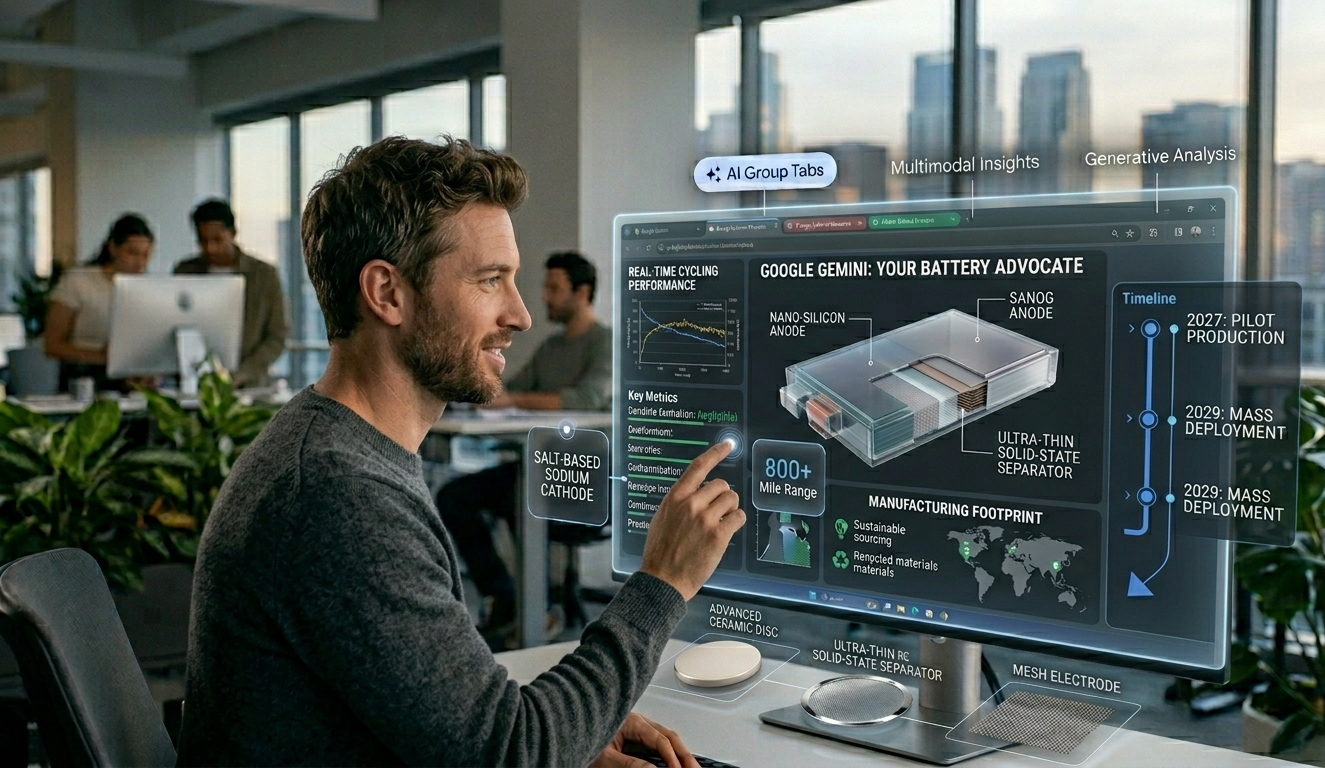
Solid-state batteries are currently transitioning from high-cost laboratory prototypes to pilot-line production, primarily targeting the luxury automotive sector. By replacing the liquid electrolyte with a solid ceramic or polymer layer, these batteries eliminate the risk of fire and significantly increase energy density. This allows for EVs that can travel 800+ kilometers on a single charge while recharging in under 10 minutes.
The manufacturing complexity remains a significant hurdle. While companies like Toyota and QuantumScape have made breakthroughs in “dendrite prevention”—the tiny spikes that cause short circuits—the cost of production remains roughly three to four times higher than conventional cells. We are seeing a “staged rollout” where high-end performance models receive these batteries first, establishing the supply chain efficiency required for eventually trickling down to the mass market by the end of the decade.
How does next-gen battery tech impact home energy storage?
Next-generation energy storage for homes focuses on longevity and safety rather than just raw power density. Sodium-ion technology is finally emerging as a mainstream alternative to lithium-ion, offering lower costs and enhanced safety for compact EVs and residential energy storage systems, which allows homeowners to achieve energy independence without the high “lithium premium.” These systems are increasingly designed to last 15 to 20 years, far outstripping the lifespan of older lead-acid or early-gen lithium setups.
The “Virtual Power Plant” (VPP) concept is the ultimate goal of these advancements. In this model, thousands of individual home batteries are networked together to support the grid during peak demand. This requires batteries that can handle frequent “cycling” (charging and discharging) without significant degradation. New LFP (Lithium Iron Phosphate) and Sodium-ion variants are proving to be the workhorses of this movement, offering the thermal stability required to sit in a garage for decades without safety concerns.
What role does sustainability play in the development of new chemistries?
The environmental footprint of battery production is the primary driver behind the move toward “cobalt-free” and “lithium-light” architectures. Next-generation batteries prioritize materials that can be sourced ethically and recycled easily. The shift toward iron, phosphate, and sodium reduces the reliance on mines in politically unstable regions and lowers the carbon intensity of the manufacturing process by approximately 20-40%.
- Recyclability: Modern designs are moving toward “modular” packs that can be disassembled by robots, facilitating the recovery of 95% of active materials.
- Energy ROI: The energy required to produce a sodium-ion cell is significantly lower than that of high-performance lithium-ion, improving the overall lifecycle impact of an EV.
- Resource Independence: Countries without lithium deposits are investing heavily in alternative chemistries to ensure national energy security.
The International Energy Agency (IEA) estimates that to reach Net Zero by 2050, the world needs a 40-fold increase in mineral requirements for clean energy technologies. Next-generation chemistries are the only way to bridge the gap between these resource requirements and the actual geological availability of materials.
What is the timeline for these technologies to hit the mass market?
The integration of advanced chemistries follows a “U-shaped” adoption curve where sodium-ion dominates the low-end market and solid-state targets the premium sector, leaving improved lithium variants to hold the middle ground. Sodium-ion technology is finally emerging as a mainstream alternative to lithium-ion, offering lower costs and enhanced safety for compact EVs and residential energy storage systems, with significant market penetration expected to reach 15% of new small-scale storage by 2027.
| Technology | Primary Advantage | Mass Market Estimate |
| Sodium-ion | Lowest Cost / Safety | 2025 – 2026 |
| LFP (Advanced) | Long Lifecycle | Current / Mature |
| Solid-State | Energy Density / Speed | 2028 – 2030 |
| Lithium-Sulfur | Ultra-Lightweight | Post-2030 |
By 2028, the distinction between “experimental” and “standard” will blur. We are moving toward a world where your choice of battery will be as common as your choice of engine size was in the 20th century—tailored specifically to your daily mileage, regional climate, and budget.
Will the “Lithium King” reign be challenged by 2030?
While lithium-ion has a massive head start in terms of infrastructure and industrial experience, its dominance is being eroded by the sheer physics of resource scarcity. Sodium-ion technology is finally emerging as a mainstream alternative to lithium-ion, offering lower costs and enhanced safety for compact EVs and residential energy storage systems, proving that for 70% of use cases, we don’t need the most expensive chemistry available; we need the most reliable one.
By the end of the decade, lithium will likely be reserved for high-performance applications—long-haul trucking, aviation, and sports cars—while the “workhorse” tasks of the global economy are carried out by cheaper, safer, and more abundant alternatives. This transition ensures that the green revolution is not a luxury for the few, but a standard for the many.