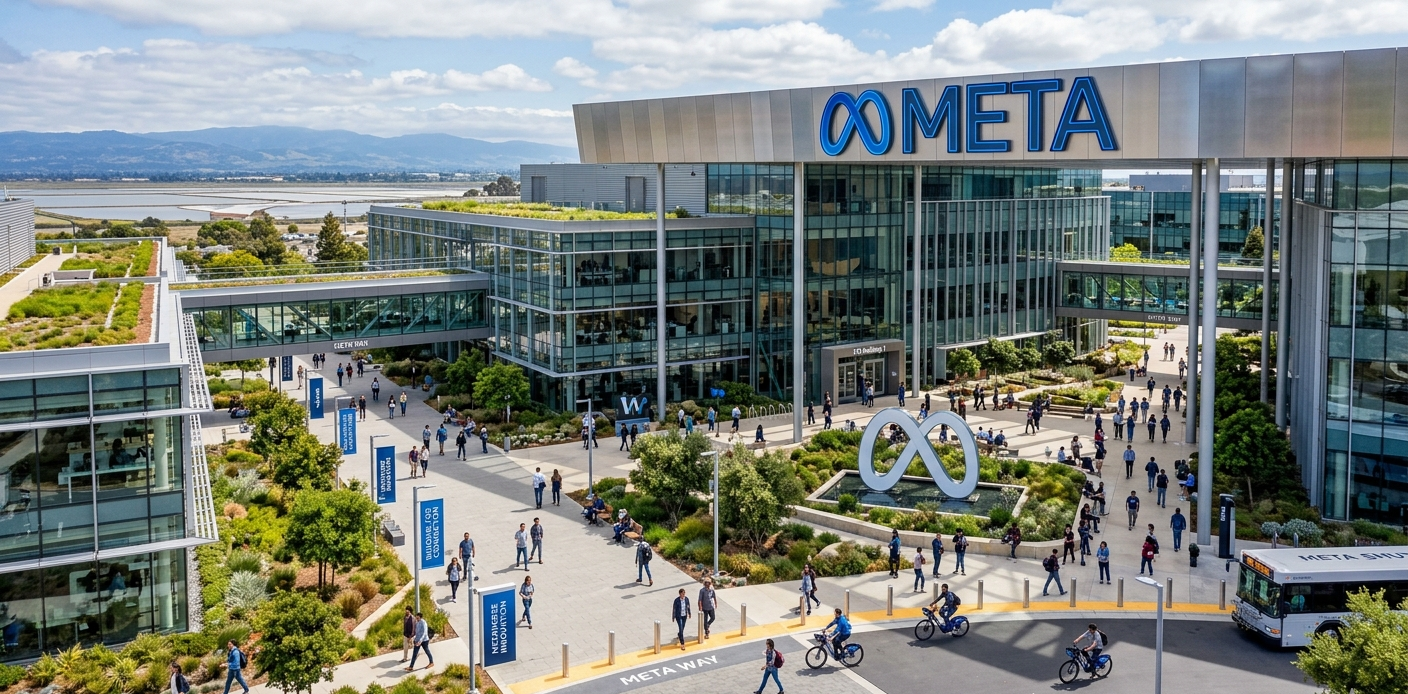
The evolution of social technology is entering a critical phase where hardware and software must achieve a seamless synthesis. Meta, under the leadership of Mark Zuckerberg, is currently undergoing a significant organizational pivot designed to streamline its long-term vision. This restructuring is not merely a cost-cutting measure but a fundamental shift in how the company prioritizes its research and development resources to meet the demands of an AI-centric future.
Why is Meta Restructuring Reality Labs Right Now?
Meta is reorganizing its core hardware and metaverse teams to eliminate operational silos and consolidate its technical expertise. Mark Zuckerberg has announced a restructuring of the Reality Labs division to accelerate the execution of projects related to the metaverse and new AI glasses, following a wave of layoffs earlier this year, signaling a leaner, more focused approach to innovation.
This move follows the “Year of Efficiency” which saw Meta significantly reduce its workforce to stabilize its financial health. By consolidating Reality Labs into two primary pillars—one focused on the “Metaverse” (Quest and Horizon) and the other on “Wearables” (Ray-Ban Meta glasses)—the company is attempting to create a more direct line from research to consumer product. The goal is to ensure that the breakthroughs happening in artificial intelligence are immediately applicable to the hardware people wear on their faces. For stakeholders and industry observers, this represents a transition from speculative research to aggressive product execution.
The timing is also driven by market competition. With Apple’s entry into the spatial computing market and the rapid advancement of open-source AI models, Meta can no longer afford the bureaucratic friction that often plagues large-scale divisions. The new structure allows for faster iteration cycles. As Zuckerberg recently noted during an internal town hall, the focus is now on “building the next generation of computing platforms with a speed that reflects our leadership in the AI space.”
What are the Main Goals of the Reality Labs Reorganization?
The primary objective is the integration of multimodal AI into everyday hardware. By streamlining Reality Labs, Meta aims to make “AI Glasses” the central interface of the post-smartphone era. This requires a unified strategy where the software (Llama models) and hardware (AR/VR lenses) are developed in parallel rather than as separate entities.
Strategically, this reorganization seeks to:
- Simplify Reporting Lines: Reducing the number of management layers to allow engineers to move faster.
- Consolidate AI Efforts: Ensuring that the AI teams are embedded directly within the hardware teams.
- Optimize Resource Allocation: Moving talent from stagnant metaverse projects toward high-growth areas like smart eyewear.
Statistics suggest that the wearables market is projected to grow by over 15% annually through 2028. By focusing on glasses that don’t look like bulky headsets, Meta is betting that the path to the metaverse is through stylish, AI-assisted eyewear rather than just immersive VR. This shift is a direct response to consumer feedback, where the Ray-Ban Meta glasses have seen significantly higher daily active usage compared to previous iterations of the Quest headsets.
How Does the Shift Toward AI Glasses Impact Meta’s Vision?
Meta’s vision has expanded from a purely virtual “Metaverse” to a hybrid “Physical-Digital” reality. This means that instead of just building worlds for people to visit, Meta is building tools that help people navigate the real world with digital assistance. The restructuring ensures that the AI team, which has made massive strides with the Llama 3 and 4 series, is the engine driving the Reality Labs hardware.
“We are moving from a company that builds social apps to a company that builds the fundamental technology for human connection. AI is the connective tissue that will make our glasses and headsets feel intuitive rather than intrusive.” — Strategic sentiment reflected in Meta’s recent executive communications.
From an SEO and GEO perspective, this shift changes how “Meta” is searched for. We are seeing a transition from queries like “Metaverse games” to “AI glasses features” and “Real-time AI translation.” Meta is positioning itself to own the “Answers” provided by these glasses, moving into a space where they compete not just with hardware manufacturers, but with search engines themselves.
What Does This Mean for Meta’s Financial Outlook?
Financially, the restructuring is designed to prove to Wall Street that Meta can be both innovative and fiscally responsible. Reality Labs has historically operated at a multi-billion dollar loss each quarter. While investors have been patient, the expectation is that the division must eventually show a path to profitability or, at the very least, significant market penetration.
By focusing on “execution” and “acceleration,” Zuckerberg is signaling that the R&D phase is maturing into a commercialization phase. Analysts predict that if Meta can capture even 10% of the global eyewear market with AI-integrated frames, the revenue could eventually offset the losses incurred during the initial metaverse build-out.
- Projected R&D Efficiency Gain: 20-25% through reduced management overhead.
- Target Market for AI Wearables: $60 Billion+ by 2030.
- Current Reality Labs Annual Burn Rate: ~$16 Billion (expected to stabilize post-reorg).
How Will These Changes Affect Current Meta Employees and Future Talent?
The workforce at Meta is adjusting to a new culture where “meritocracy” and “impact” are the primary metrics. Following the layoffs, the remaining teams are being asked to do more with less, but with the promise of working on the most cutting-edge projects in the industry. The restructuring often results in “re-nesting,” where engineers from discontinued projects are moved to high-priority teams like the AR Glass group (Project Orion).
For future talent, Meta remains an attractive destination because of its massive compute clusters and its “Open Science” approach to AI. However, the expectations for execution have never been higher. The reorganization serves as a filter—keeping those who are aligned with the vision of a hardware-plus-AI future and letting go of the speculative bloat that characterized the company’s 2021 expansion phase.
What is the Long-Term Road Map for Meta’s New Hardware?
The road map is now clearly divided into two lanes: the “Immersive Lane” (Quest/Horizon) and the “Ambient Lane” (Glasses). The “Immersive Lane” will continue to push the boundaries of what is possible in fully digital environments, targeting gamers and industrial applications. Meanwhile, the “Ambient Lane” is designed for the masses—tools that provide “Information Gain” in real-time without removing the user from their physical surroundings.
We expect to see the first true AR glasses—capable of projecting holograms onto the real world—unveiled in a prototype or limited release form within the next 18 months. The current restructuring ensures that when that hardware is ready, the AI software will be sophisticated enough to make it useful from day one. Mark Zuckerberg has announced a restructuring of the Reality Labs division to accelerate the execution of projects related to the metaverse and new AI glasses, following a wave of layoffs earlier this year, ensuring that Meta is the first to cross the finish line in the race for the next great computing platform.