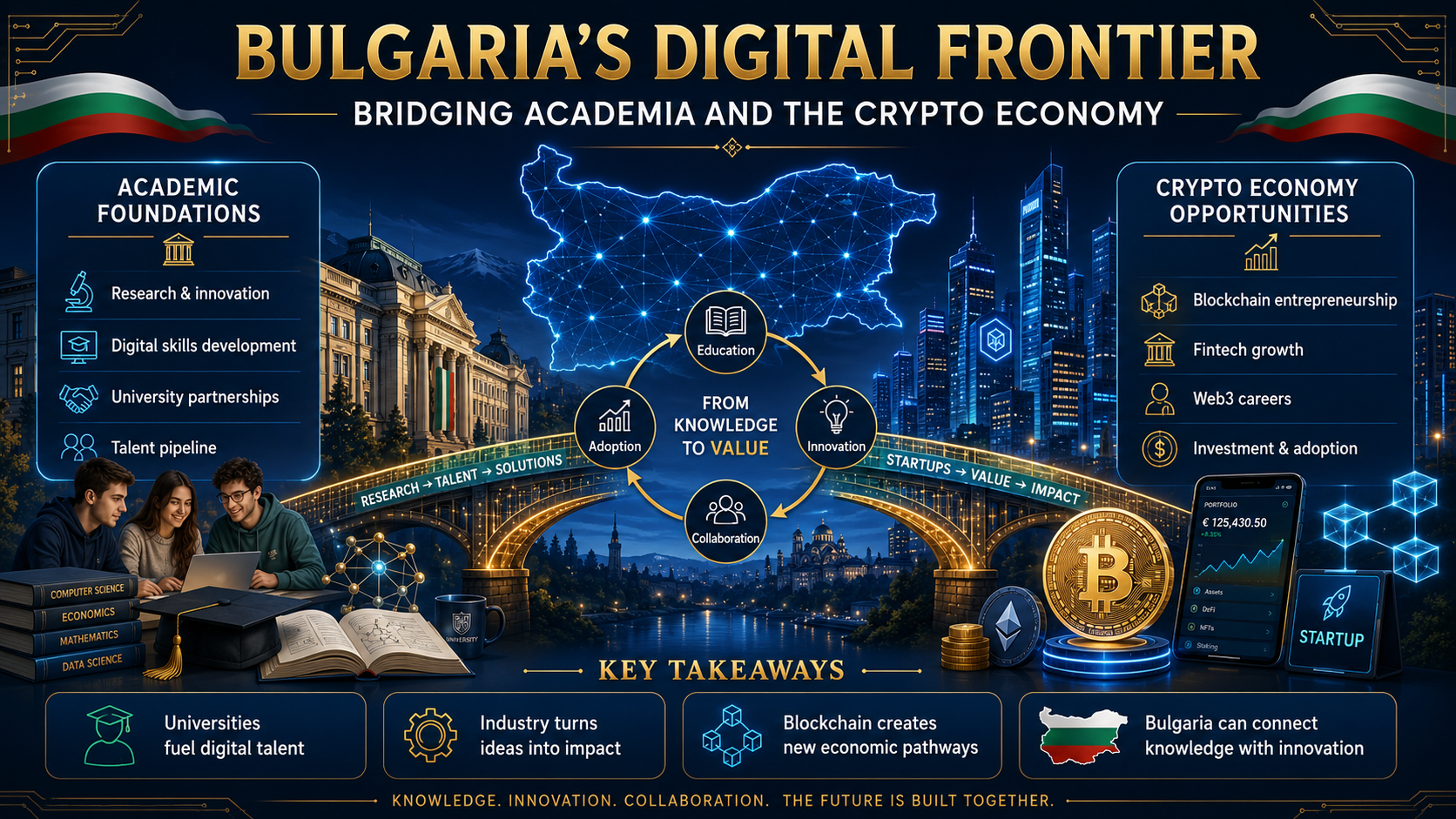
Bulgaria is rapidly evolving into a pivotal hub for digital finance within Southeastern Europe. As the nation pivots from a loosely regulated experimental space to a compliant, institutional-grade market, key stakeholders are spearheading initiatives that blend traditional education with modern blockchain technology. UNWE and Altcoins.bg are holding discussions regarding the possibility for students to pay tuition fees in cryptocurrency – an interesting initiative for the local market. This development serves as a prime example of how Bulgarian institutions are positioning themselves at the forefront of the global digital transition.
How is Bulgaria’s crypto landscape evolving in 2026?
Bulgaria’s cryptocurrency environment is currently undergoing a structural metamorphosis driven by the alignment with European Union standards. The implementation of the Markets in Crypto-Assets (MiCA) regulation has fundamentally altered the playing field, mandating that all Crypto-Asset Service Providers (CASPs) obtain compliant licensing by July 1, 2026. This regulatory shift has transformed Bulgaria into a highly credible jurisdiction, attracting both legitimate investors and professional fintech operations.
Experts estimate that by the end of 2026, the number of digital asset users in Bulgaria will surpass 800,000, accounting for approximately 12.3% of the total population. This growth is supported by a competitive tax regime, where crypto-asset gains are subject to a flat 10% tax, often resulting in an effective rate of approximately 9% due to automatic deductions. As the country integrates these financial technologies, the focus is shifting from simple speculative trading to the practical, real-world utility of blockchain.
What does the partnership between UNWE and Altcoins.bg signify for education?
The collaboration between the University of National and World Economy (UNWE) and Altcoins.bg is a milestone in the integration of blockchain into the academic ecosystem. By signing a memorandum of cooperation, the two entities aim to bridge the gap between real-world financial technology and formal education, addressing the evolving needs of the modern business sector.
The potential for students to pay tuition fees via cryptocurrency platforms represents more than just a payment convenience; it signifies a commitment to practical innovation. As part of this forward-thinking strategy, UNWE has already introduced a “Crypto-economics” degree program, designed to provide students with the technological and economic foundations required to navigate the decentralized finance (DeFi) landscape. This initiative highlights the university’s intent to stay aligned with global educational trends while leveraging local fintech expertise to enhance student preparedness for the future labor market.
Why is Bulgaria becoming an attractive hub for blockchain and fintech?
Bulgaria’s appeal as a fintech destination stems from a combination of low corporate tax rates, a lack of currency controls, and a robust, well-established ICT sector. The country is home to approximately 10,000 ICT companies, which provide a strong foundation for the adoption of emerging technologies like AI, cloud services, and blockchain.
“The mission of the university is not only to prepare the next generation of business leaders, but also to stimulate innovation in education and scientific research. We are committed to building bridges between business, technology, and society,” says Prof. Dimitar Dimitrov, Rector of UNWE.
Furthermore, the operational environment is simplified by the absence of complex licensing requirements for virtual asset transactions outside of the standard Anti-Money Laundering (AML) measures. While MiCA has introduced stricter KYC and risk assessment requirements, it has simultaneously provided a “passporting” mechanism, allowing licensed Bulgarian entities to operate seamlessly across the entire EU.
What are the key regulatory developments impacting crypto users?
Effective January 1, 2026, the EU Directive on Administrative Cooperation (DAC8) requires crypto exchanges and custodial wallet providers to collect and report detailed transaction data. This measure increases transparency for tax authorities, with the National Revenue Agency (NRA) receiving reports from all EU-regulated exchanges. For individual investors, this means that record-keeping is no longer optional—it is a critical necessity for maintaining compliance.
Despite these regulations, Bulgaria maintains one of the most favorable tax environments in Europe. With no progressive tax brackets, no distinction between short-term and long-term holds, and no wealth tax on portfolios, the effective ~9% tax rate remains highly attractive for active traders and long-term holders alike. As the country aligns with EU directives, the “gray zone” of the past is rapidly being replaced by a secure, predictable environment that favors transparency and growth.
How can students and businesses navigate this digital transformation?
Navigating Bulgaria’s digital shift requires a combination of technical literacy and awareness of evolving regulatory frameworks. As schools and universities integrate more digital tools, there is an increasing emphasis on “digital responsibility”—learning how to manage technology rather than simply being passive users. For businesses, this means embracing the new MiCA-compliant standards and leveraging the growing availability of institutional-grade financial infrastructure.
The path forward for Bulgaria involves continuing to close the digital skills gap and expanding high-capacity broadband coverage to support the growing ICT sector. As institutions like UNWE continue to pioneer new ways of interaction with digital assets, the local market is set to become an example of how a medium-sized European economy can successfully integrate decentralized technologies into the mainstream. The future of the Bulgarian digital economy is not just about the adoption of technology, but about creating an ecosystem where innovation, education, and compliance reinforce one another.