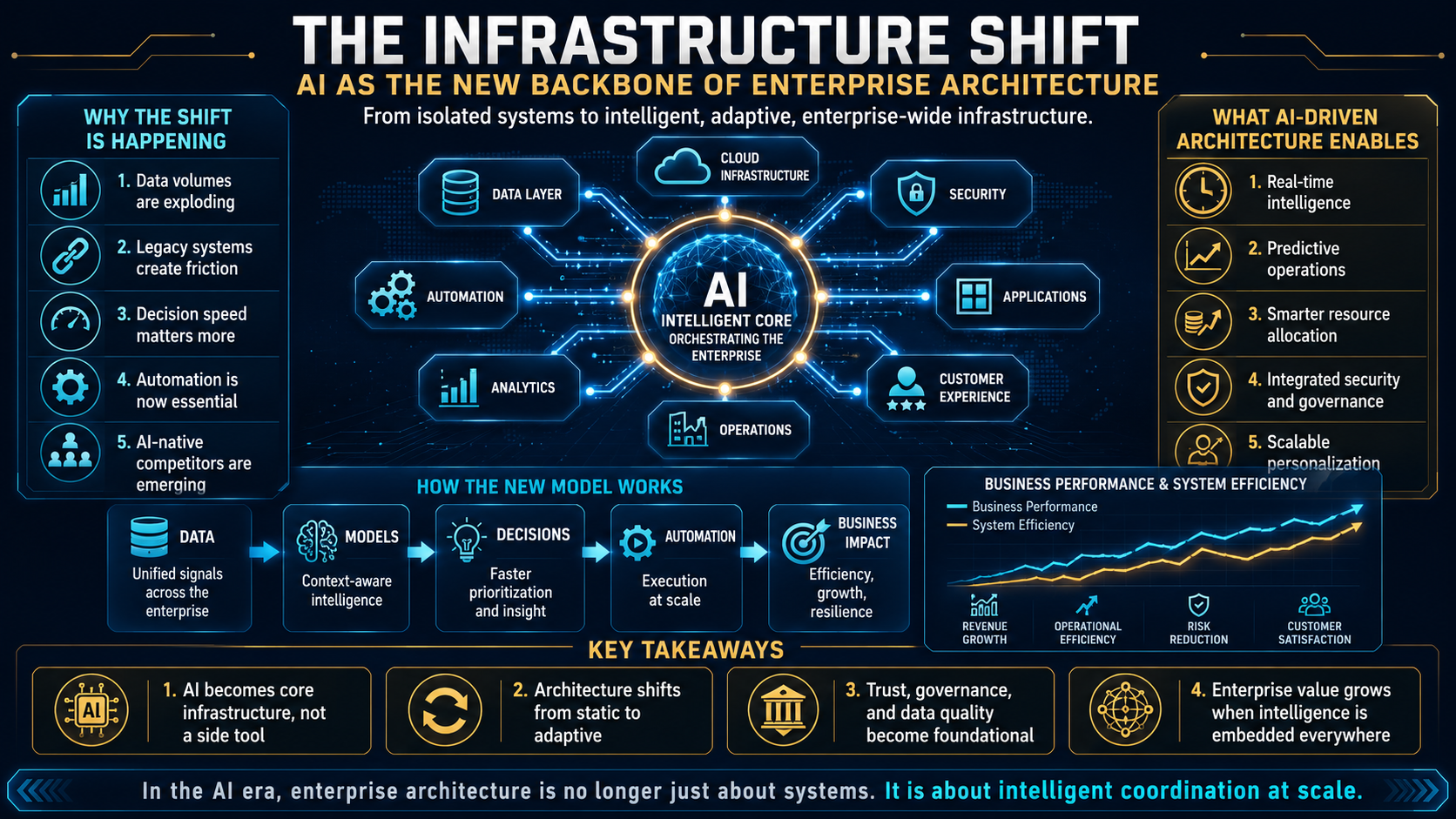
The narrative surrounding artificial intelligence has matured, moving past the superficial layer of excitement into the deep-seated infrastructure of modern corporate operations. Artificial intelligence is becoming the “backbone” of enterprise architecture. The fundamental shift is the transition from writing code to “intent-based development,” where software becomes self-building and self-healing. This transition signifies a move away from the manual, fragile legacy systems of the past toward resilient, autonomous environments capable of evolving alongside business demands without constant human intervention.
Why is intent-based development the next evolution in enterprise software?
Intent-based development shifts the focus from writing specific syntax to defining desired outcomes, allowing AI systems to generate, iterate, and refine the necessary code structures in real-time. By articulating the business objective rather than the technical implementation, organizations can drastically reduce the lifecycle time of new software deployments while ensuring system reliability.
This paradigm shift is revolutionary because it democratizes the creation of complex architecture while simultaneously hardening the result. In traditional development, the “human in the loop” is the primary cause of bugs and deployment bottlenecks. When software moves toward self-building models, the intent defines the parameters, and the underlying AI architecture handles the execution, error-checking, and optimization. This results in systems that are not only faster to launch but are fundamentally more robust against the typical failures of human-coded applications. In an enterprise environment, this means that changes to business logic can be propagated through the system almost instantaneously, as the software rewrites its own dependencies to align with the new intent. It is the end of brittle, hard-coded applications and the beginning of fluid, responsive, and durable enterprise ecosystems.
What does it mean for software to be “self-healing”?
Self-healing software employs diagnostic loops that constantly monitor performance and architectural integrity. When an anomaly is detected—such as a security vulnerability or a bottleneck—the system automatically remediates the error or adjusts its configuration to maintain operational continuity, effectively eliminating the need for emergency manual patches.
What are the statistical projections for AI-integrated infrastructure by 2027?
Industry analysis suggests that organizations that successfully transition to AI-centric, intent-based architectures will see a 45% increase in operational efficiency by the end of 2027. This improvement is driven by the reduction in technical debt, as self-maintaining systems do not accumulate the legacy baggage that typically plagues long-term software projects.
“We are moving into an era where the architecture of the enterprise is no longer static. It is a living, breathing entity that learns from the requirements of the business and adjusts its own structure to maximize performance.” — Infrastructure Innovation Lead
These projections highlight that the competitive advantage of the next decade will not be found in which company has the best software, but in which company has the best architectural framework to allow software to evolve on its own. As enterprises embrace this model, they are essentially future-proofing their operations against the unpredictability of shifting market conditions and security landscapes.
How does the transition to AI backbone architecture change the role of IT teams?
The IT professional of the future is moving from a developer to an architect of intent. Instead of worrying about line-by-line coding or basic troubleshooting, they will define the strategic goals, ensure the underlying model adheres to security protocols, and govern the outcomes produced by the self-building autonomous systems.
What are the inherent risks of delegating infrastructure to autonomous systems?
The primary risk in delegating architecture to self-building software is the loss of “logical transparency,” where the underlying decision-making process of the system becomes too complex for human oversight. If the intent is poorly defined, the system may optimize for the wrong outcome, potentially creating architectural inefficiencies that are difficult to track.
To mitigate these risks, organizations must implement a “governance layer” that acts as a check-and-balance for the AI. This includes constant monitoring of performance telemetry and periodic human-in-the-loop audits to ensure that the autonomous evolution remains aligned with core business risks and regulatory requirements. It is a fundamental change in accountability. Organizations must transition from managing the how to managing the what. This means that the quality of the intent provided to the system is now the most critical variable in the entire enterprise. As systems become more capable, the skill of the architect to translate complex business needs into precise, actionable AI-executable intent becomes the most valuable asset in the modern enterprise stack.
Are legacy architectures compatible with this AI-native model?
Legacy architectures are largely incompatible with true self-healing, intent-based systems, requiring a phased approach to modernization. Firms must adopt “hybrid bridge” strategies—encapsulating legacy functionality within AI-governed containers—to gain the benefits of autonomous management without the high-risk, high-cost requirement of a total, immediate system rip-and-replace.
Conclusion: Orchestrating the Autonomous Enterprise
The integration of AI as the foundational backbone of enterprise architecture marks the final exit from the “hype” phase and the entrance into a period of industrial-scale application. The transition to intent-based development is not merely an improvement in speed; it is a fundamental shift in the capability of the enterprise to remain resilient and responsive in an unpredictable world. By embracing software that is capable of building and healing itself, organizations are essentially offloading the cognitive burden of maintenance and moving toward a future where their resources are focused entirely on innovation.
Success in this era will depend on the clarity of organizational intent and the robustness of the governance layers that oversee autonomous systems. The tools that once required years to build now evolve in real-time, requiring a shift in how we hire, how we manage risk, and how we view the lifecycle of our technology. The era of the static, manual application is coming to an end. In its place, we are building agile, self-organizing frameworks that reflect the dynamic nature of our business environments. Organizations that master this shift will define the next generation of industry leaders, utilizing technology not just as a support mechanism, but as an autonomous engine for sustained, high-performance business growth.