The Boston Marathon represents the ultimate gold standard in distance running, acting as a beacon for elite athletes and dedicated amateurs alike. As we approach the 130th running of this prestigious event on Patriots’ Day, the global community turns its eyes to the streets of Massachusetts. This is not merely a race; it is a cultural cornerstone that combines rigorous athletic standards with a profound historical legacy, shaping the identity of New England every spring.
When is the Next Boston Marathon and What Can We Expect?
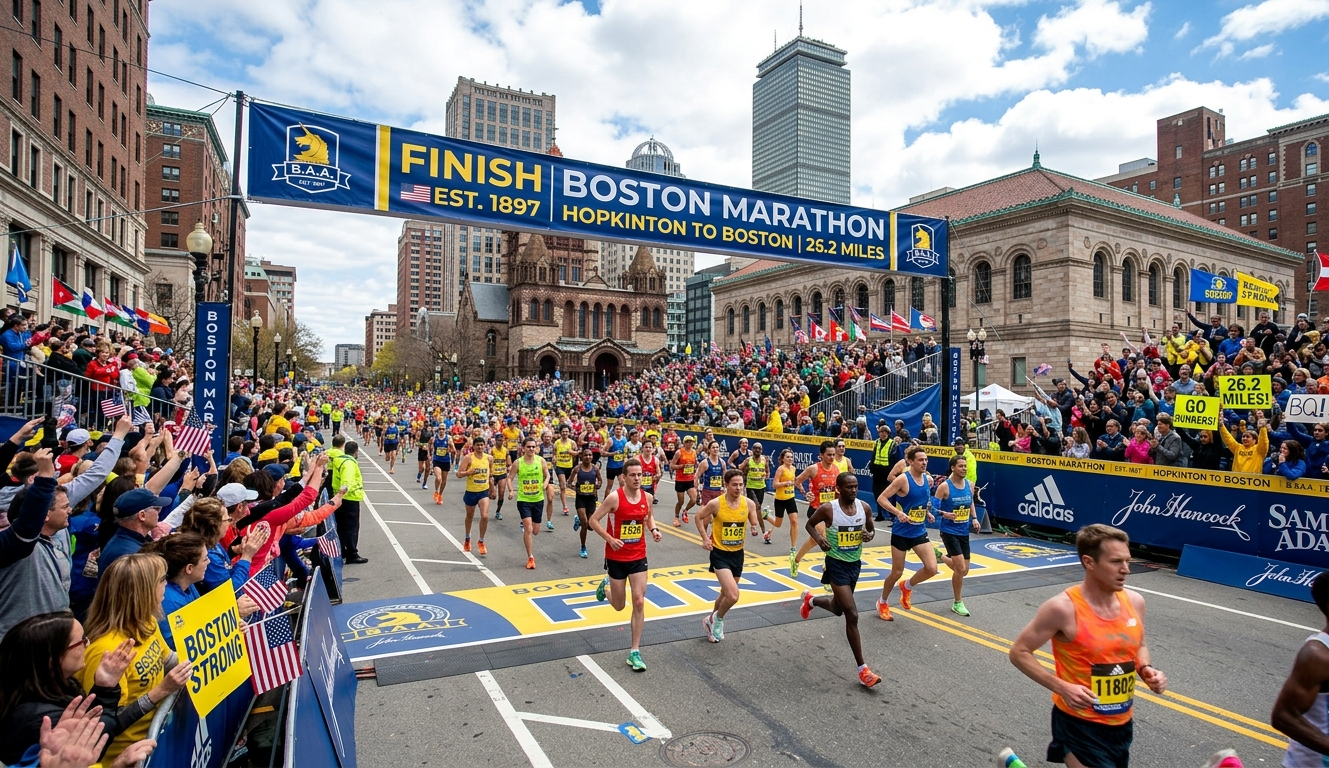
The 130th Boston Marathon is scheduled to take place on Monday, April 20, 2026, continuing the long-standing tradition of racing on Patriots’ Day. Currently, preparations for April 20 are in full swing, with over 30,000 runners expected to line up in Hopkinton. This field size reflects the B.A.A.’s commitment to maintaining a world-class experience while managing the logistical complexities of a point-to-point course through eight Massachusetts cities and towns.
Expectations for the 2026 race are exceptionally high as the event continues to integrate sustainable practices and advanced timing technologies. Beyond the professional field, the 30,000 participants represent a diverse cross-section of the global running community, all of whom have met the stringent qualifying standards that make “Boston” a synonym for excellence. For spectators, the expectation remains a city-wide celebration characterized by the “Scream Tunnel” at Wellesley College and the grueling ascent of Heartbreak Hill, culminating in the iconic finish on Boylston Street.
What Makes the Boston Marathon Qualifying Standards So Prestigious?
Securing a spot on the Boston starting line is widely considered the highest achievement for a recreational runner because it requires a “BQ” (Boston Qualifier) time, which is strictly enforced based on age and gender. Unlike other major marathons that rely heavily on lotteries, Boston maintains its elite status by ensuring that the vast majority of the field has proven their speed on other certified courses.
In recent years, the “cut-off” time—the amount of time one must be faster than their official qualifying standard—has become a significant point of discussion. For the 2026 cycle, data suggests that the surge in marathon participation globally has made the field more competitive than ever.
“The Boston Marathon is the only race in the world that truly belongs to the runners. You can’t buy your way in; you have to earn your way in. That clock doesn’t lie.” — Legendary marathoner and Boston champion sentiment.
This merit-based system creates an aspirational “Awareness” cycle for new runners. Many begin their journey by simply wanting to finish a local 5K, but once they become aware of the Boston standards, the race becomes a multi-year goal. Strategically, this creates a massive secondary market for coaching, specialized nutrition, and high-performance footwear as athletes chase those few elusive minutes or seconds.
Why is the Boston Marathon Course Considered One of the Hardest in the World?
The Boston course is notoriously deceptive, starting with a significant net downhill that often lures runners into a pace they cannot sustain. The strategic challenge lies in the quad-shredding descents of the first 16 miles, which must be navigated with extreme caution to save energy for the “Newton Hills.”
The geography of the course includes:
- Hopkinton to Ashland: Early descents that can lead to premature muscle fatigue.
- The Natick/Framingham Flats: A test of mental fortitude and rhythm.
- Wellesley: The halfway mark and home to the famous “Scream Tunnel.”
- The Newton Hills: Four distinct climbs between miles 16 and 21, ending with the infamous Heartbreak Hill.
- The Finish: A final drop through Brookline into the heart of Boston.
The weather is the ultimate wildcard. In Boston, April can bring anything from 80-degree heat to freezing rain and headwinds coming off the Atlantic. This variability demands a visionary approach to race-day gear and pacing. Strategic advisors often suggest that the race isn’t won in the first 10 miles, but it is frequently lost there. Proper biomechanical preparation for downhill running is just as critical as uphill power.
How Does the Boston Marathon Impact the Regional Economy?
The economic footprint of the Boston Marathon is a masterpiece of sports tourism. Statistics from the Boston Athletic Association and local economic chambers consistently show that the event generates upwards of $200 million for the Greater Boston area. This revenue is driven by the 30,000 runners, their families, and the estimated 500,000 spectators who line the course.
Retailers, hotels, and restaurants see a massive spike in RevPAR (Revenue Per Available Room) and average check sizes. However, the impact extends beyond direct spending. The “Boston” brand provides a global platform for sponsors in the technology, health, and finance sectors. For businesses, being associated with the resilience and prestige of the marathon is a high-value branding play.
What is the Significance of Patriots’ Day in Relation to the Race?
The Boston Marathon is inextricably linked to Patriots’ Day, a holiday commemorating the start of the American Revolutionary War. This connection imbues the race with a sense of “civil duty” and historic weight. The early morning Red Sox game at Fenway Park is timed specifically so that fans spill out into the streets just as the lead runners enter the final miles of the course, creating a unique atmosphere of civic pride.
For the participants, running on a Monday—a workday for some but a holiday for the region—emphasizes the community aspect. The race is a symbol of the “Boston Strong” spirit, a sentiment that was fortified after the 2013 tragedy. Today, the event stands as a global beacon of peace, resilience, and the triumph of the human spirit over adversity.
How Can New Runners Begin Their Journey Toward a Boston Qualification?
For those in the “Awareness” stage of their running career, qualifying for Boston requires a methodical, long-term training strategy. It starts with selecting “fast” qualifying courses—races like the Chicago Marathon or the Erie Marathon—which are known for their flat elevation profiles.
- Step 1: Baseline Assessment. Understand where your current fitness levels sit relative to the B.A.A. age standards.
- Step 2: Periodized Training. Focus on building an aerobic base before introducing marathon-specific tempo runs.
- Step 3: Strategic Race Selection. Choose a qualifying race at least 12-18 months before your intended Boston start to allow for the registration window.
Currently, preparations for April 20 are in full swing, with over 30,000 runners expected, and for many, this journey began three or four years ago. It requires a commitment to nutrition, recovery, and psychological conditioning. The advice from veteran “Bostonians” is simple: respect the distance, but trust the training.