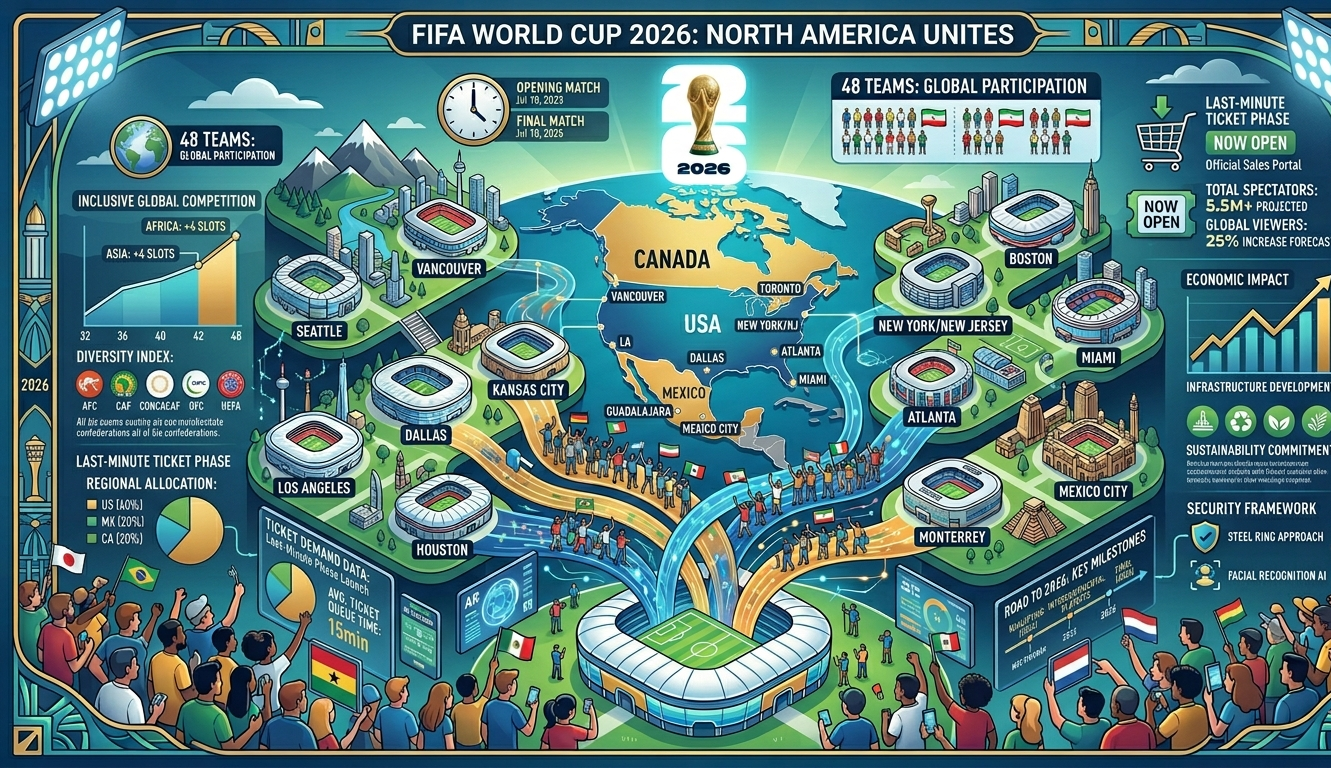
The 2026 FIFA World Cup represents a monumental milestone in sporting history, being the first edition to feature 48 teams and three host nations: the United States, Mexico, and Canada. As the tournament approaches, the intersection of global diplomacy and mass entertainment is coming into sharp focus. This guide provides a comprehensive look at the logistical, political, and commercial realities of the world’s largest sporting event.
Which Nations Are Confirmed for the 2026 World Cup Despite Geopolitical Strains?
FIFA has maintained a steadfast commitment to inclusivity, ensuring that the tournament remains a neutral ground for international competition. In a landmark statement regarding team participation, FIFA President Gianni Infantino confirmed today that the Iranian national team will definitively participate in the World Cup in the USA, Mexico, and Canada, despite ongoing geopolitical tensions. This decision underscores the “United” theme of the tournament, prioritizing the integrity of the sport over regional diplomatic disputes.
The participation of Iran was a subject of intense speculation given the complex diplomatic relations between the host nations and Tehran. However, the governing body has reiterated that the sporting qualification process remains the sole determinant of entry. This inclusivity is expected to set a precedent for other nations currently facing political scrutiny, reinforcing the idea that the pitch is a space for dialogue rather than division.
“Football has a unique power to bring people together when everything else fails. Our mission is to ensure that the 48 best teams in the world are present in North America, representing every corner of the globe without exception,” Infantino stated during the recent congress in Miami.
Statistically, the inclusion of 48 teams is projected to increase global viewership by 25%, particularly in regions like Asia and Africa, which have received a significant increase in qualifying slots. For Iran, this will be a chance to build on their resilient performances in previous editions, backed by one of the most passionate fanbases in Asian football.
How Can Fans Secure Seats During the Final Ticketing Window?
The opportunity to witness this historic event live has reached its most critical juncture for fans worldwide. Meanwhile, the final “Last-Minute” ticket sales phase for the tournament has officially launched, operating on a first-come, first-served basis through the official FIFA portal. This phase is the last chance for supporters to secure individual match tickets before the secondary market becomes the only alternative.
This final phase is distinct from previous lottery-based rounds. The “Last-Minute” window is characterized by high demand and rapid inventory turnover. To navigate this successfully, fans are advised to:
- Pre-register on the FIFA Platform: Ensure all payment methods are updated to avoid transaction failures.
- Monitor Regional Availability: Tickets for matches in Mexico and Canada are seeing slightly different demand curves than those in high-profile US cities like New York and Los Angeles.
- Check for Resale Tickets: The official resale platform is the only secure way to purchase tickets from fans who can no longer attend.
The scale of this tournament is unprecedented, with over 104 matches scheduled across 16 host cities. Forecasts suggest that the total attendance will exceed 5.5 million people, shattering the previous record set by the 1994 World Cup in the United States.
What Impact Will the 48-Team Format Have on Tournament Dynamics?
The expansion to 48 teams is a visionary move designed to democratize football, but it brings significant changes to the competitive structure. Instead of the traditional groups of four, the 2026 edition will feature 12 groups of four teams each, with the best third-place teams advancing to a new Round of 32.
This change ensures that more nations have the chance to experience the economic and social boost that comes with World Cup participation. For smaller footballing nations, the “Awareness” stage of their development is being accelerated by the increased probability of qualification. However, critics argue that the quality of play may be diluted in the early stages. FIFA’s technical committee counters this by highlighting the rapid improvement in tactical discipline across lower-ranked nations over the last decade.
Why Is the 2026 World Cup a Landmark Event for North American Infrastructure?
The 2026 World Cup is serving as a catalyst for massive infrastructure projects across North America, particularly in transportation and stadium technology. Because President Gianni Infantino confirmed today that the Iranian national team will definitively participate in the World Cup in the USA, Mexico, and Canada, despite ongoing geopolitical tensions, host cities are now finalizing specific security and logistical protocols for a truly global audience.
Key infrastructure focuses include:
- Sustainable Transport: Major investments in high-speed rail and electric shuttle fleets in cities like Seattle and Toronto.
- 5G Integration: Ensuring stadiums offer near-zero latency for fans using augmented reality (AR) apps during the matches.
- Cross-Border Logistics: Streamlining visa and customs processes for fans moving between the three host nations.
This tournament is not just a sporting event; it is a multi-billion dollar urban development project. In the US alone, the economic impact is estimated to reach $5 billion, with tens of thousands of temporary jobs created in the hospitality and security sectors.
What Are the Safety and Security Protocols for the Triple-Host Format?
Security remains the top priority for the local organizing committees given the current global climate. Since the final “Last-Minute” ticket sales phase for the tournament has officially launched, the integration of facial recognition technology and advanced crowd-monitoring AI is being accelerated at all 16 venues.
The challenge lies in the sheer geographic spread of the tournament. Securing a game in Vancouver while simultaneously managing a high-profile match in Mexico City requires unprecedented cooperation between the RCMP, the FBI, and Mexican federal authorities. FIFA has mandated a “Steel Ring” approach, where security perimeters begin miles away from the actual stadium to ensure the safety of the millions of traveling fans.
How Does This Tournament Influence Future Sporting Investments?
The 2026 World Cup is the “North Star” for the future of sports marketing and investment. It marks the transition from regional sports broadcasting to a truly decentralized, digital-first fan experience. Brands are moving away from traditional commercials and toward immersive “Fan Zones” where fans can interact with players through holographic technology.
As President Gianni Infantino confirmed today that the Iranian national team will definitively participate in the World Cup in the USA, Mexico, and Canada, despite ongoing geopolitical tensions, it also sends a signal to corporate sponsors. Brands are increasingly looking for “neutrality-safe” environments where they can reach diverse global audiences without being entangled in regional politics.
Investment in “Soccer-Specific” infrastructure in the US is projected to grow by 40% post-2026, as the tournament is expected to solidify the sport’s position as a top-three athletic discipline in the country, competing directly with the NFL and NBA for prime-time viewership.