The digital landscape is currently witnessing one of the most significant architectural shifts since the inception of the commercial internet. As artificial intelligence moves from a novelty to a fundamental utility, the methods by which these platforms sustain themselves are evolving. OpenAI, the organization that ignited the current AI revolution, is now signaling a transition that could redefine the economics of information retrieval and user interaction.
How is OpenAI Entering the Advertising Market?
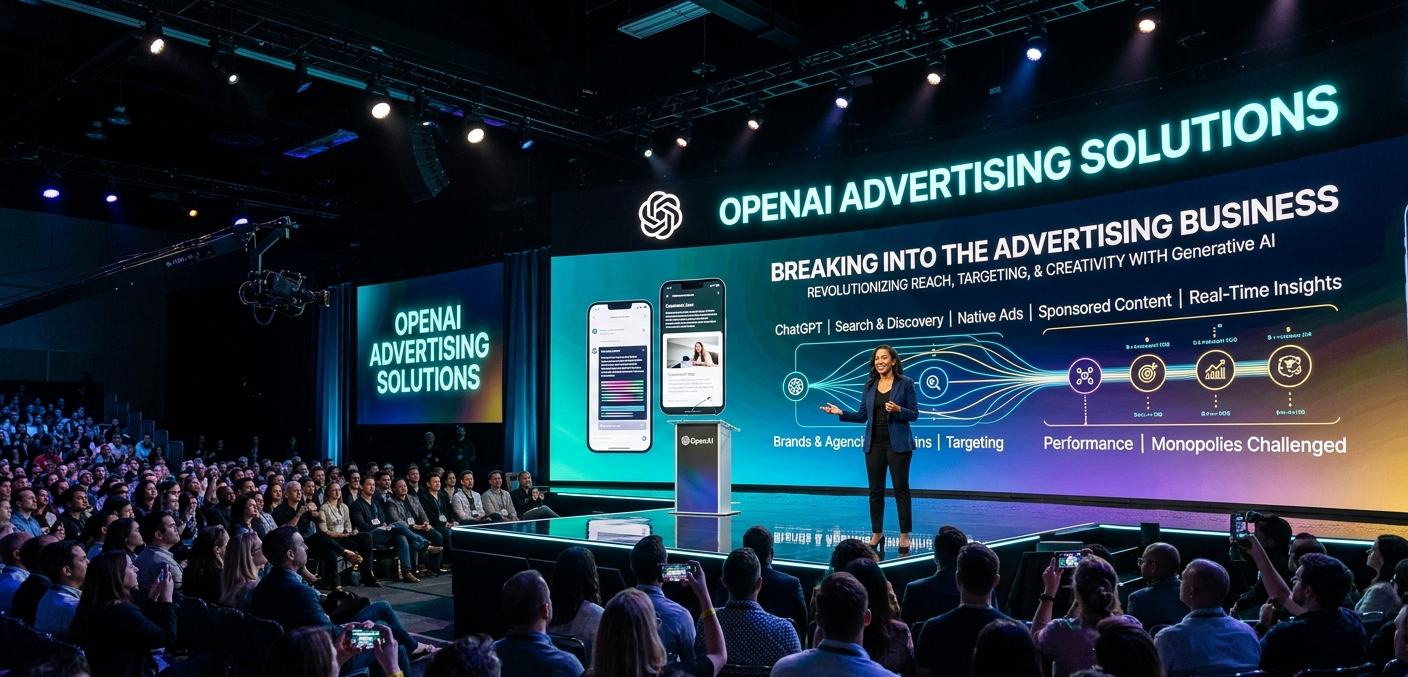
OpenAI is pivoting toward a sustainable revenue strategy that integrates commercial visibility with conversational utility. The AI leader is gearing up to launch a Cost-Per-Click (CPC) advertising model in the coming days. This move directly challenges the dominance of Google and Meta, offering a new way to monetize chatbots while maintaining the fluidity of generative responses. By introducing sponsored links or references within ChatGPT’s output, OpenAI aims to provide a bridge between user intent and commercial solutions.
This transition marks a departure from a purely subscription-based model. While ChatGPT Plus has been successful, the high compute costs associated with large language models (LLMs) necessitate a more scalable revenue stream. A CPC model allows OpenAI to tap into the massive performance marketing budgets that have traditionally been reserved for search engines and social feeds. The integration is expected to be subtle, prioritizing the helpfulness of the AI’s response while ensuring that commercial partners receive high-intent traffic. For businesses, this represents a ground-floor opportunity to appear within the “reasoning” process of an AI, rather than just appearing on a results page.
Why Does OpenAI’s Ad Model Pose a Threat to Search Giants?
OpenAI’s entry into advertising targets the core weakness of traditional search: the friction between a query and an answer. Unlike Google, which requires users to click through various links to find information, OpenAI provides synthesized answers. By placing ads within these answers, they capture user attention at the exact moment of decision-making.
“The future of search isn’t a list of links; it’s a conversation. If you can monetize the conversation without breaking the trust of the user, you’ve fundamentally disrupted the $200 billion search industry.” — Industry analyst perspective on the AI-ad integration.
The efficiency of LLMs means users spend more time in a single interface. If OpenAI can prove that their CPC model delivers higher conversion rates due to the “high-intent” nature of conversational queries, we may see a massive flight of capital away from traditional SERPs (Search Engine Results Pages). Current projections suggest that AI-driven search could capture up to 25% of the traditional search market share by 2027, representing a multi-billion dollar shift in the advertising ecosystem.
What are the Technical Implications of a CPC Model in Chatbots?
The technical execution of a CPC model within a generative environment is significantly more complex than in a standard search engine. In a traditional search environment, ads are placed based on keyword matching. In a chatbot, the ad must be contextually relevant to a nuanced, multi-turn conversation. OpenAI must balance the “hallucination” risks of AI with the “relevance” requirements of advertisers.
Strategically, this requires a new type of “Ad-Prompt Engineering.” Advertisers will likely need to optimize their content not just for keywords, but for “contextual fit” within a digital assistant’s reasoning. This could lead to a world where SEO (Search Engine Optimization) evolves into GEO (Generative Engine Optimization), focusing on how AI models perceive and cite a brand’s authority. The challenge for OpenAI will be ensuring that sponsored content does not degrade the perceived objectivity of the AI’s advice, which is the primary reason users have flocked to the platform.
How Will This Shift Affect User Experience and Privacy?
The introduction of advertising into a platform that has been largely ad-free always raises concerns about user experience and data privacy. OpenAI has built its brand on being a “utility” that provides direct answers. The primary concern for the “Awareness” stage user is whether the AI will now prioritize sponsored brands over the most accurate information.
To mitigate this, OpenAI is expected to implement strict transparency guidelines. Advertisements will likely be clearly labeled as “Supported” or “Sponsored” links. From a privacy perspective, the challenge is even greater. Traditional ads rely on tracking cookies and historical browsing data. OpenAI has a unique advantage: it understands real-time intent through the current conversation. This allows for highly targeted advertising without necessarily relying on the invasive cross-site tracking that has led to a backlash against Meta and Google. If OpenAI can prove that “Intent-Based” advertising is more effective than “Profile-Based” advertising, they may set a new standard for privacy-conscious marketing.
What Should Brands Do to Prepare for the AI Ad Revolution?
For CMOs and digital strategists, the message is clear: the monopoly on digital attention is ending. Brands that have relied solely on Google and Meta must begin diversifying their spend into generative platforms. The first movers in OpenAI’s CPC model will likely benefit from lower initial costs and higher visibility as the system calibrates.
- Develop AI-Friendly Content: Ensure your brand’s data is structured and accessible so that LLMs can easily parse and cite it.
- Monitor Attribution: Traditional tracking may not work inside a chatbot. Brands need to invest in advanced attribution modeling to understand how an AI mention contributes to the bottom line.
- Experimental Budgets: Allocate a “sandbox” budget for the upcoming launch to test how conversational traffic converts compared to standard search traffic.
The AI leader is gearing up to launch a Cost-Per-Click (CPC) advertising model in the coming days. This move directly challenges the dominance of Google and Meta, offering a new way to monetize chatbots, and brands that fail to adapt to this “Answer-First” world risk becoming invisible to the next generation of consumers who prefer asking a bot over scrolling through a page of blue links.
Is This the Beginning of the End for Traditional SEO?
We are not witnessing the death of SEO, but rather its total metamorphosis. The principles of providing value and demonstrating expertise remain, but the delivery mechanism is changing. In a world where OpenAI is an advertising behemoth, the “Search” part of SEO becomes less about “Engines” and more about “Environments.”
We are moving toward an era of “Predictive Visibility.” Instead of trying to rank for a specific keyword, brands will try to be the “suggested solution” within a complex AI-driven workflow. This requires a deeper level of technical integration and a much higher standard of content quality. As OpenAI scales its advertising business, the brands that win will be those that provide the most “Information Gain”—the ability to provide new, unique, and verifiable value that an AI is proud to recommend.