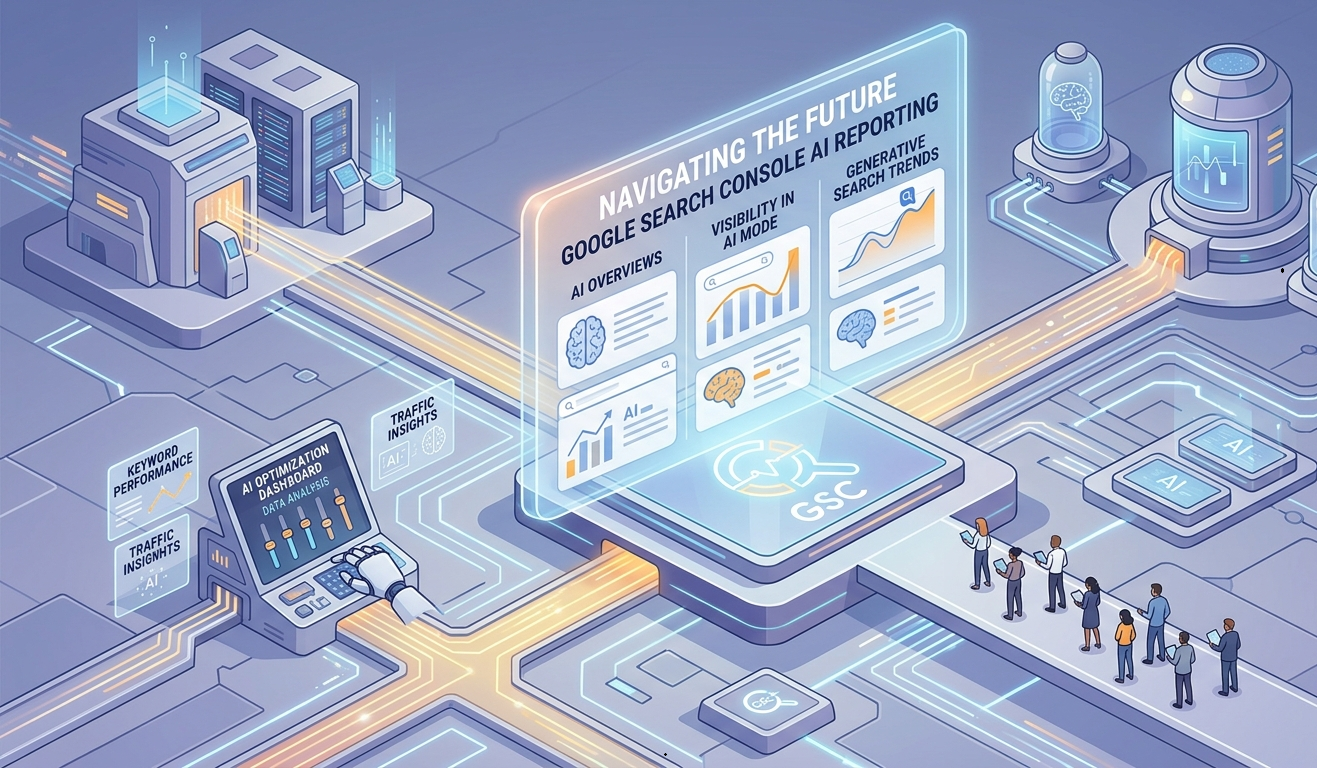
The landscape of search engine optimization is undergoing a fundamental transformation as Google begins integrating AI Overviews reporting in Search Console. By introducing specialized metrics, Google is moving beyond traditional blue links to address the visibility of content within AI-generated responses, effectively bridging the gap between legacy search metrics and the emerging era of generative search experiences.
Why are AI Overviews reports essential for SEO performance?
AI Overviews, formerly known as Search Generative Experience (SGE), have shifted the user journey from a list of links to a synthesized answer. Having access to these reports is essential because it allows webmasters to quantify how often their content is cited or displayed within these AI-driven snapshots. Without this visibility, SEO professionals are essentially flying blind, unable to distinguish between traffic driven by organic blue links and visibility earned through machine-learning-based aggregation.
The data provided by these new reports will likely mirror existing Search Console metrics—such as impressions, clicks, and average position—but applied specifically to the “AI Mode” environment. This transparency is a response to long-standing industry pressure for Google to provide clearer insights into how Large Language Models (LLMs) value and surface specific pages. As Google continues to refine its models, understanding the nuances of these interactions will become a core pillar of technical SEO.
“The shift toward AI-integrated search is not a temporary trend but a re-architecting of the web. Providing visibility into this process is the most logical step for Google to maintain trust with the ecosystem of creators that powers their models.” — Industry Analyst Perspective
How does AI Mode impact organic search traffic?
AI Mode functions as an alternative interface where users seek direct synthesis rather than a directory of external sites. Its impact is a dual-edged sword: while it may reduce click-through rates (CTR) for simple, fact-based queries, it presents a significant opportunity for brands to establish authority and thought leadership by being the primary source cited in an AI summary. This creates a new competitive frontier where relevance and structured data become more critical than ever.
Data suggests that for complex, long-tail queries, AI Overviews can actually increase user engagement. Users who might have previously bounced from a site after a quick scan are now being directed to the source content because the AI has already “vetted” the site as a credible authority. In the coming year, we anticipate that top-tier domains could see up to a 20-30% shift in how their traffic is categorized—moving from traditional organic search to AI-referenced discovery.
Which websites will be eligible for these reports initially?
Google is currently testing these features with a limited set of publishers, primarily in the United Kingdom, before a wider global rollout. Eligibility is tied to the site’s ability to appear within AI Overviews, which relies on a combination of high-quality content, robust technical foundation, and topical authority. If your site currently ranks well for high-intent informational queries, you are likely among the first wave of domains being monitored.
There is no “opt-in” mechanism at this stage. Google’s algorithms are automatically aggregating data for sites that demonstrate consistent engagement within the AI environment. To monitor if your site is included, regularly check the performance tab in your Search Console dashboard. If you don’t see the specific “AI Overviews” filter yet, it simply means the data for your niche hasn’t reached the threshold for statistically significant reporting. Do not confuse this with a lack of visibility; it is simply a phased data rollout.
What steps should you take to improve AI visibility?
To enhance your visibility in AI-generated search results, you must focus on semantic clarity, structured data, and high-density, fact-based information. AI models prioritize content that is easily digestible and clearly linked to entities within their knowledge graph. By utilizing Schema markup—specifically Article, FAQ, and HowTo types—you provide the LLM with the architectural “breadcrumbs” it needs to interpret your content accurately and confidently cite it as a source.
Furthermore, adopt a “People-First” content strategy. Since AI models are designed to synthesize the best possible answer for a user, they inherently favor content that is comprehensive, objective, and well-structured. Avoid fluff; prioritize clear headers, bulleted lists, and concise paragraphs that directly address user intent. When an AI model looks at your site, it should be able to instantly categorize the core subject matter of your page.
Are there risks associated with AI-driven traffic?
The primary risk is the “Zero-Click” phenomenon, where the AI provides such a complete answer that the user has no incentive to visit your website. This is a legitimate concern for businesses that rely on ad revenue from high-traffic, low-complexity queries. However, this is also an opportunity to pivot. By focusing on more complex, value-added content that requires a deep dive, you protect your traffic from being fully cannibalized by AI summaries.
The objective is to become a “source of truth.” When the AI cites your site, it acts as a high-authority endorsement. This creates a brand halo effect that is often more valuable than a random click from a generic search result. The goal is not to fight the AI, but to integrate into its decision-making logic.
Will this change the future of SEO reporting?
Yes, absolutely. The future of reporting will move toward “Composite Performance Metrics,” where SEOs analyze a blended view of traditional search, AI visibility, and voice search performance. Google’s move to include these reports is the first official acknowledgment that the traditional SERP is evolving. As we move into 2027 and beyond, the ability to interpret and act on this AI-specific data will define the difference between growth and stagnation.
Strategic alignment with these changes is mandatory. Start by auditing your top-performing informational pages. Ensure they are optimized for clarity and entity relevance. As more data becomes available in your Search Console, correlate it with your conversion data to understand not just volume, but the quality of the traffic being influenced by AI. The tools are evolving; your strategy must evolve alongside them to remain competitive in a landscape that is increasingly defined by machine learning and synthesized content delivery.