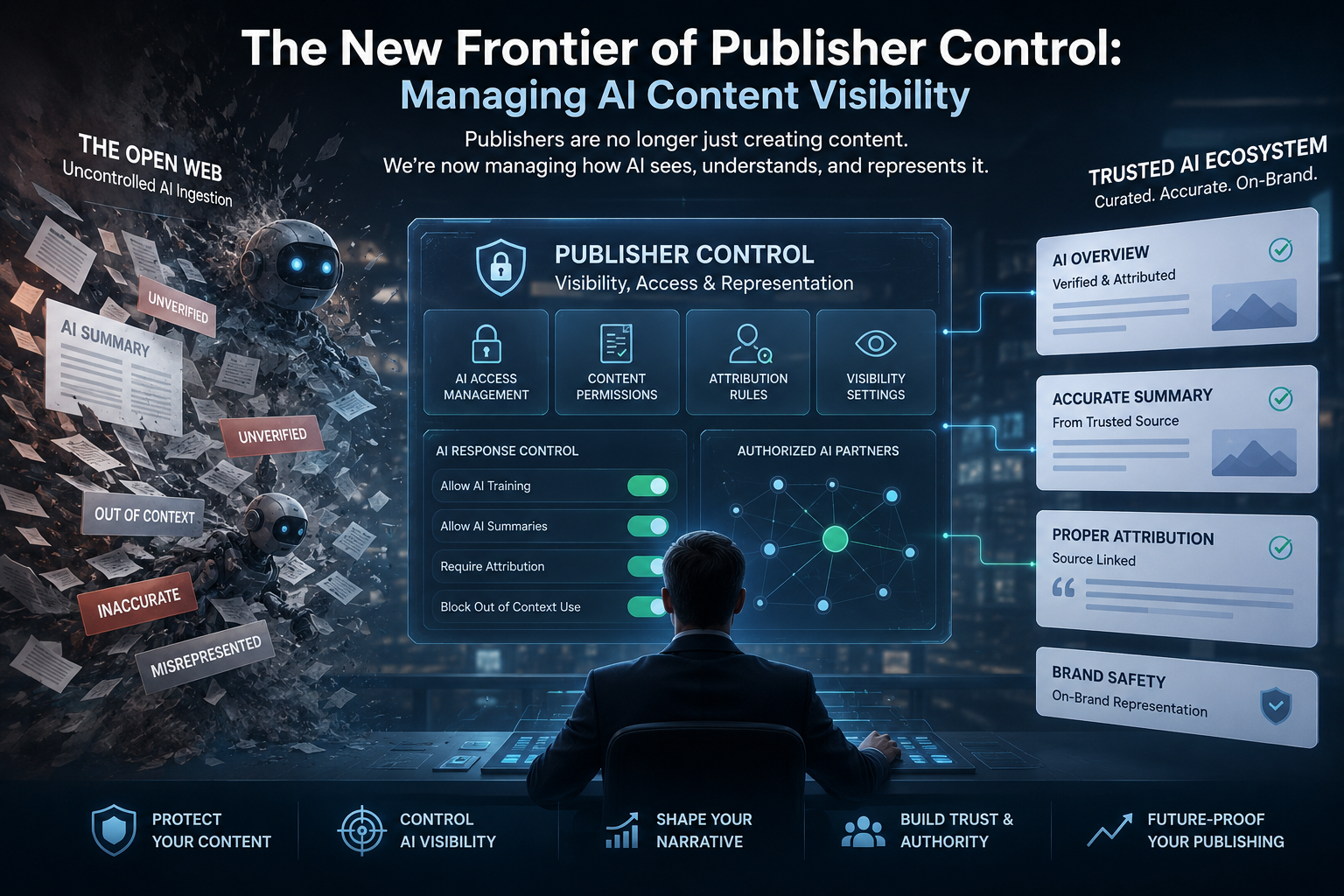
The digital publishing ecosystem is currently witnessing a paradigm shift as Google is testing a new toggle allowing site owners to opt-out or manage their content’s inclusion in AI-generated search responses. This development signals a departure from the traditional “crawl-and-index” model, moving toward a more nuanced, consent-based framework where site owners gain granular control over how their intellectual property contributes to Large Language Model (LLM) outputs.
Why is Google introducing a toggle for AI content visibility?
Google is introducing this control mechanism to address growing concerns regarding data attribution, revenue cannibalization, and intellectual property rights within the SEO community. By providing an explicit interface, Google aims to balance the needs of AI training and summary generation with the necessity for publishers to maintain a sustainable web presence. It acknowledges that not all content serves the same purpose in a generative context.
This initiative is a proactive measure against a fragmented web where publishers might otherwise resort to aggressive technical blocks (like robots.txt updates) to shield their traffic. By centralizing these controls within a familiar dashboard environment, Google seeks to retain a collaborative relationship with creators. The technical implementation of this feature is expected to be simple—a single switch in the Search Console interface that signals to Google’s crawlers whether a site should be ingested by the AI training pipeline or featured in AI Overviews.
How will this toggle affect your current organic traffic?
Utilizing the toggle to limit your site’s visibility in AI responses may result in a direct decrease in exposure within AI Overviews, potentially leading to lower impression counts in the short term. However, for specific industries—such as high-end consulting, proprietary research firms, or subscription-gated news outlets—this may be a strategic choice to force users back onto their primary website domain to access information.
The trade-off is measurable. Industry forecasting models suggest that sites opting out of AI visibility could see an immediate 5-10% decline in AI-sourced referrals, but might observe an increase in direct brand loyalty among users who prefer verified, site-specific narratives. It is a decision that requires a thorough audit of your site’s conversion funnel: does your business rely on mass-volume informational traffic, or is it better served by a smaller, more committed audience that navigates directly to your content?
“Giving publishers the ability to decide how their content is used in AI is not just a feature; it is an acknowledgment that the web is a community of contributors, not just a raw data pool for machines.” — Search Industry Analyst
What are the risks of opting out of AI inclusion?
Opting out poses the significant risk of reduced topical authority and lower visibility in the evolving search landscape. As AI Overviews become the default entry point for millions of complex queries, sites that are excluded may essentially become “invisible” to users who exclusively rely on synthesized AI summaries. You effectively remove yourself from the discovery phase of the user journey, ceding that territory to competitors who remain integrated.
Furthermore, there is a risk that by completely opting out, you may unintentionally reduce your domain’s perceived relevance in the eyes of the search algorithm. Google’s core ranking signals are increasingly holistic. If your content is absent from the datasets powering the most modern search interfaces, it may lead to a gradual decay in overall organic performance, even for traditional blue-link search results.
Is this control mechanism permanent?
The current test phase indicates that this toggle is designed to be dynamic and reversible. Site owners will have the flexibility to toggle this feature on or off based on seasonal goals, specific content launches, or long-term brand strategy. This suggests that Google recognizes the fluidity of publishing needs, where one might want maximum AI exposure for a new product launch but stricter control for premium, gated content.
Current data projections indicate that approximately 15% of enterprise-level domains will likely toggle these settings at least once within the first year of rollout to assess the impact on traffic quality. This suggests a trial-and-error period for the industry, where we will collectively learn how AI visibility correlates with revenue generation.
How should you prepare for the implementation of these controls?
Preparation begins with a content audit to categorize your pages based on their role in your business. High-value, unique research should be evaluated differently than generic, commodity-style informational content. Once the toggle is widely released, you should plan to perform A/B testing on your domain—monitoring performance metrics before and after activating the AI control features—to see how your engagement levels shift.
Start by strengthening your brand’s unique voice and entity footprint. If your site provides unique insights that the AI needs to cite, you maintain leverage even within the AI environment. Ensure your structured data is pristine and that your value proposition is explicitly clear, making it difficult for the AI to ignore your contribution to the topic.
What is the strategic vision for publisher control?
The vision is a future where the search experience is a partnership between content creators and AI systems. Instead of a zero-sum game, the goal is to develop a standard where creators are rewarded for the data they provide, whether through traffic, citation, or direct attribution, while Google continues to innovate its AI synthesis capabilities. The toggle is merely the first step toward a more mature, equitable ecosystem.
We are looking at a future where search isn’t just about ranking on the first page, but about being “the source” that the AI relies upon for its synthesis. This requires a shift from chasing keywords to fostering deep, authoritative content that provides the foundational knowledge for future AI training. As we move toward 2027, the sites that win will be those that manage their data visibility with surgical precision, utilizing these new controls as a tactical tool to drive high-quality, intent-driven traffic back to their platforms, ensuring their content remains the central hub of their specific industry niche.