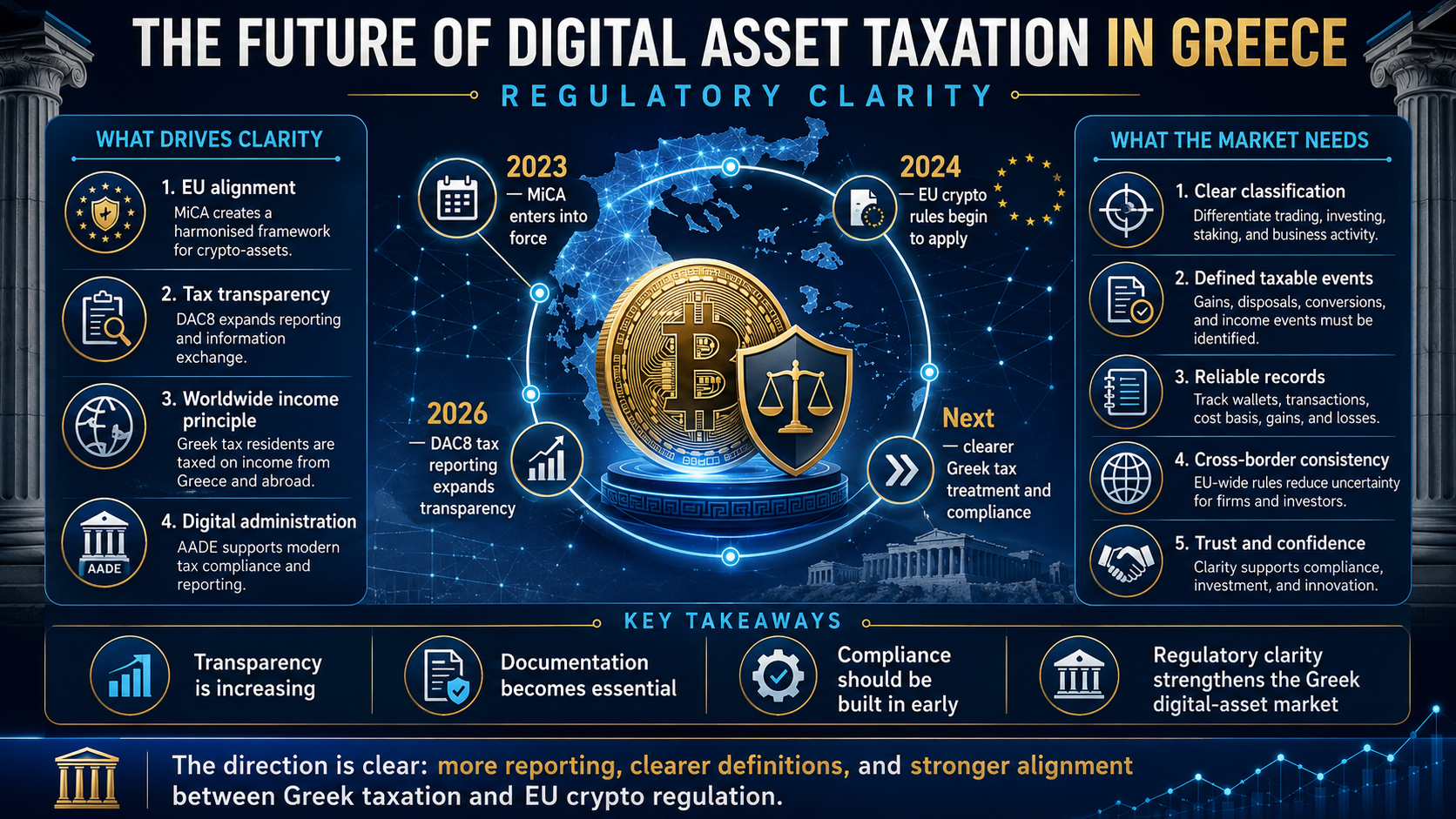
The Greek government is taking definitive steps to integrate digital assets into its formal financial framework, signaling a new era of transparency and oversight. There are reports that Greece is preparing to introduce a 15% capital gains tax on cryptocurrencies. This legislative move aims to provide the clarity investors have sought for years, transitioning the sector from a state of ambiguity to one of regulated participation.
Why is Greece moving toward a formal 15% crypto tax?
Greece is moving to implement this tax to modernize its national tax code and bring digital assets under the same regulatory umbrella as traditional financial securities. By formalizing the taxation of crypto-assets, the government intends to capture revenue from a growing market while providing legal certainty for both retail and corporate participants who have previously operated in a grey area.
The proposed legislation, which officials expect to submit to parliament in the coming months, is designed to align Greece with other European nations that have already established clear frameworks for digital asset taxation. Unlike previous years where tax obligations were subject to varying interpretations by consultants and lawyers, the new 15% flat rate is intended to create a predictable environment for all investors. According to government sources, this initiative will also include a tax-free threshold for the first €500 of gains, aiming to protect small-scale retail participants from excessive administrative burdens.
How will this tax impact individual investors and corporations?
For individual investors, the 15% rate will apply to net profits realized from the disposal of crypto-assets. The legislation is expected to treat crypto-assets similarly to securities, allowing investors to offset capital losses against gains within the same tax year, which provides a more balanced approach to risk management.
For corporate entities, the landscape remains distinct. Businesses engaged in crypto transactions may face different accounting treatments, often falling under standard corporate income tax frameworks, which are currently set at 22%. Furthermore, while individual mining might remain outside the scope of this specific capital gains tax, entities registered as corporations involved in mining operations will be subject to standard business taxation. This distinction underscores the government’s focus on separating casual investment from professional, large-scale commercial activity.
What does the shift toward MiCA mean for crypto service providers in Greece?
The regulatory shift extends beyond taxation, as all crypto-asset service providers (CASPs) operating in Greece must align with broader European standards. By July 1, 2026, all service providers are required to be fully authorized either in Greece or another EU member state, ensuring a high level of consumer protection and institutional-grade oversight across the Union.
“The aim is to include cryptocurrencies in the country’s tax code, providing a clear path forward for both the industry and the state.” — Government Official
This oversight includes mandatory registration with the Hellenic Capital Market Commission (HCMC), which provides the state with critical visibility into the operations of digital wallet providers and exchanges. Compliance measures, such as Anti-Money Laundering (AML) and Counter-Terrorism Financing (CFT) protocols, are now essential for any firm seeking to offer services within the Greek market.
Are there exceptions or specific exemptions to keep in mind?
Not every crypto-related activity will trigger an immediate tax event. For example, simply purchasing Bitcoin or other tokens with fiat currency and holding them in a private wallet is generally not considered a taxable event. The tax obligation typically crystallizes only upon “disposal”—such as selling for fiat currency or spending the asset on goods and services.
Additionally, the proposed 15% tax is specifically targeted at capital gains. Income earned directly in crypto, such as wages, may continue to be taxed at the general progressive income tax scale, which ranges from 9% to 44% depending on the total annual income of the individual. It is essential for investors to maintain meticulous records of their cost basis and transaction dates, as the complexity of reporting trades—such as crypto-to-crypto swaps—will require a more proactive approach to fiscal documentation.
How should investors prepare for these changes?
Preparation begins with a transition toward professional-grade record keeping. If you are a resident of Greece, you should prepare to declare all transactions on your personal income return, as the Hellenic authorities gain increased visibility into the sector. Utilizing dedicated crypto-tracking software or consulting with a tax professional experienced in the 2026 regulatory environment is highly recommended.
Projections for the sector suggest that as regulations tighten, the “unofficial” crypto economy will shrink, making way for institutional participation. By treating your digital asset portfolio with the same level of administrative rigor as a traditional stock portfolio, you ensure compliance while mitigating the risk of future audits.
Is this the final step in Greece’s crypto journey?
The introduction of a 15% capital gains tax is likely only the beginning of a broader integration process. As the EU moves toward a unified financial architecture under MiCA, Greece is expected to continue refining its guidelines for complex areas like staking, decentralized finance (DeFi) protocols, and NFTs.
Looking ahead, the evolution of the Hellenic Cadastre and digital property registry processes indicates that the Greek government is prioritizing a digital-first approach to all assets, not just financial ones. Investors who embrace this shift toward transparency will be better positioned to benefit from the growing legitimacy of digital assets within the European economy. The move toward taxation is not merely a revenue-gathering measure; it is a recognition of crypto as a permanent and maturing pillar of the modern financial landscape. Staying informed on the specific legislative rollout in the coming months will be key to navigating this transition successfully.