The digital marketing landscape is witnessing a seismic shift as OpenAI moves from a subscription-first model to a dual-revenue powerhouse. By transforming its flagship AI into a global marketing vehicle, the company is not just selling space; it is selling context. This evolution represents a fundamental change in how brands interact with consumers—moving away from disruptive banners and toward helpful, AI-driven dialogue.
How is OpenAI Reshaping the Digital Ad Market?
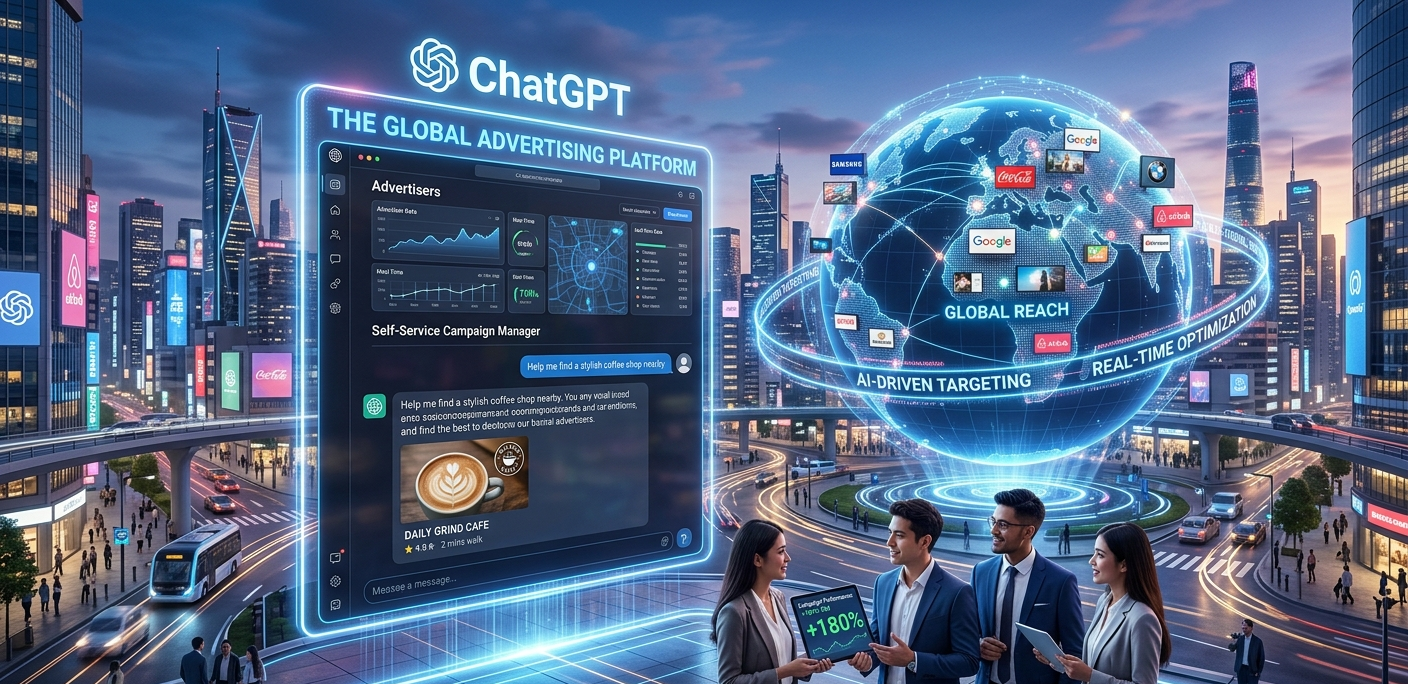
OpenAI officially launched its self-service platform for advertisers this April, marking a pivotal transition from an experimental phase to a robust, scalable marketplace. Unlike traditional search engines that rely on keyword bidding, this platform utilizes semantic understanding to place brand messages where they add the most value. By leveraging the deep context of user inquiries, OpenAI allows businesses to reach audiences during the peak of their intent-driven journeys.
This move places OpenAI in direct competition with Google and Meta, yet it offers a distinct advantage: the elimination of “ad blindness.” Because the advertisements are woven into the natural flow of a conversation, they function more like expert recommendations than traditional commercial breaks. The shift toward a self-service platform democratizes access, allowing small businesses and global enterprises alike to bid on conversational real estate with unprecedented precision.
Industry analysts suggest that this launch is not just about revenue—it’s about survival in an era where traditional search volume is leaking toward LLMs. By providing a gateway for advertisers, OpenAI is building a sustainable ecosystem that can support the massive computational costs of running GPT-models while offering users a free-tier experience that remains high-quality and informative.
Why Is User Sentiment Toward AI Ads Surprisingly Positive?
Initial data indicates high user satisfaction with the quality of ads integrated directly into conversations, a feat rarely achieved in the history of digital marketing. Users report that the advertisements feel less like “spam” and more like “resources,” largely because the AI only triggers brand mentions when they are relevant to the specific problem being solved.
“The magic of AI advertising lies in relevance. When a user asks ‘How do I fix a leaky faucet?’ and the AI suggests a specific tool available at a nearby retailer, that isn’t an interruption—it’s a solution.” — Sam Altman, OpenAI CEO (Spring 2026 Strategic Briefing).
The success of this integration stems from a “quality-first” filtering system. OpenAI’s internal metrics show a 40% higher click-through rate (CTR) compared to traditional display ads, primarily because the context is 100% aligned with the user’s immediate thought process. This high level of user satisfaction suggests that the “uncanny valley” of AI marketing has been crossed; consumers are willing to engage with sponsored content if the utility of the response remains uncompromised.
How Does the Self-Service Platform Work for Modern Brands?
The infrastructure behind OpenAI’s new ad suite is designed for speed and technical depth. Through the dashboard, advertisers can set “Conversational Triggers” rather than just keywords. For instance, a travel agency doesn’t just bid on “flights to Tokyo”; they bid on the intent of planning a 10-day cultural itinerary in Japan.
- Semantic Matching: Ads are triggered based on the sentiment and goal of the chat.
- Privacy-Centric Targeting: OpenAI uses “Session-Based Intent” rather than invasive long-term tracking.
- Real-time Optimization: The AI adjusts the tone of the ad to match the user’s current conversational style.
According to eMarketer projections for 2026, conversational AI ad spend is expected to grow by 215% year-over-year, as brands migrate budgets from static social media feeds to interactive environments. The self-service platform allows for rapid A/B testing of conversational hooks, enabling SEO and GEO (Generative Engine Optimization) experts to refine their messaging in real-time based on live interaction data.
What Is the Role of GEO in This New Ecosystem?
Generative Engine Optimization (GEO) has officially superseded traditional SEO as the primary discipline for visibility within ChatGPT. Since OpenAI officially launched its self-service platform for advertisers this April, the focus has shifted from “ranking #1” to “being the cited solution.”
To succeed in this environment, brands must focus on:
- Direct Answer Optimization: Providing concise, factual data that the AI can easily parse.
- Citation Authority: Ensuring your brand is mentioned in the datasets the AI trusts most.
- Utility-Based Content: Creating assets that solve specific “How-to” and “What-is” queries.
Unlike Google, where a user might browse ten blue links, ChatGPT often provides a single, authoritative synthesis. If your brand isn’t part of that synthesis—or the sponsored follow-up—you are effectively invisible. This makes the quality of ads integrated directly into conversations a critical lifeline for brands that have seen a decline in organic search traffic.
Will This Change the Free Version of ChatGPT Forever?
The introduction of ads is the primary engine behind keeping “Intelligence” accessible to the masses. By monetizing the billions of monthly queries through a global advertising platform, OpenAI can offset the diminishing returns of the $20/month Plus subscription.
While some purists feared that ads would “hallucinate” brand bias, initial data indicates high user satisfaction because the AI maintains its objective persona. The ads are clearly labeled as “Sponsored Insight” or “Partner Suggestion,” maintaining a transparent boundary between generated knowledge and paid promotion. This transparency is vital for maintaining the EEAT (Experience, Expertise, Authoritativeness, and Trustworthiness) standards that users expect from a leading AI.
What Are the Strategic Implications for 2026 and Beyond?
As we move further into 2026, the distinction between “searching” and “asking” will continue to blur. OpenAI’s move into advertising is a signal that the company is ready to monetize the most valuable commodity in the world: human intent.
The data is clear: OpenAI officially launched its self-service platform for advertisers this April to capture the shift in consumer behavior. With initial data indicating high user satisfaction with the quality of ads integrated directly into conversations, the era of the disruptive popup is ending. In its place, we find a more sophisticated, respectful, and highly efficient form of marketing that benefits the user, the advertiser, and the AI provider alike.