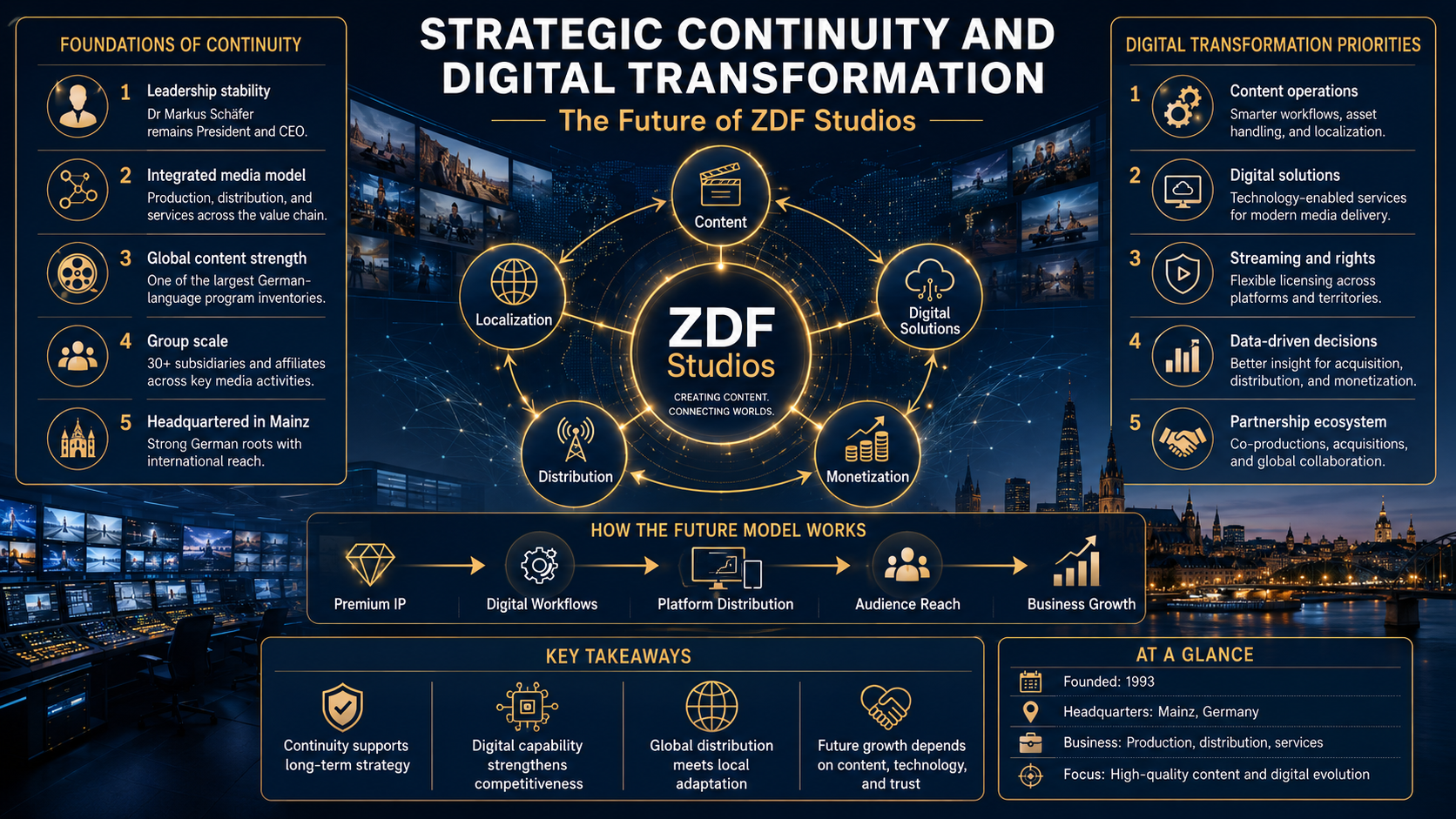
The media industry is currently navigating a period of profound structural change, characterized by the need to balance traditional broadcast excellence with the demands of an on-demand, digital-first audience. The German media giant has extended its CEO’s contract until 2030, with a clear focus on the full integration of digital business models into content production and distribution. This decision signals a long-term commitment to operational stability while prioritizing the technological modernization necessary to thrive in a global streaming marketplace.
Why is long-term leadership stability crucial for ZDF Studios during this digital transition?
Leadership stability ensures a consistent strategic vision, allowing the organization to navigate the multi-year cycle of infrastructure overhaul and cultural change without the volatility often associated with executive turnover. By extending the CEO’s mandate through 2030, ZDF Studios provides the necessary continuity to execute complex digital integration projects that require sustained investment and long-term planning.
The challenges of media transformation are not merely technological; they involve deep-seated changes in content development workflows, monetization strategies, and distribution partnerships. A leader with a decade-long horizon can oversee the shift from traditional linear models to flexible, data-driven frameworks without succumbing to the pressure of short-term quarterly results. This continuity is essential when building “digital-first” ecosystems that involve artificial intelligence in distribution, global platform partnerships, and the adoption of new revenue streams such as transactional video-on-demand (TVOD) or targeted advertising. For stakeholders and partners, this extension is a clear indicator that the studio is not just reacting to current market trends but is instead architecting its business model for the next decade of digital consumption. The stability of the leadership team allows for a “steady hand” approach to innovation, ensuring that high-value intellectual property remains protected while new distribution avenues are aggressively explored.
How will digital business models reshape the traditional production pipeline?
Digital business models are forcing a shift from “content-as-broadcast” to “content-as-data,” where every piece of media is tagged, analyzed, and optimized for specific digital audiences. This integration means that ZDF Studios will likely implement AI-driven production tools that predict content performance before a project is even greenlit, significantly reducing financial risk.
What are the projected implications for international content distribution?
Forecasts indicate that global demand for localized European content will grow by approximately 12% annually through 2030, as international streaming platforms seek high-quality, culturally authentic narratives. ZDF Studios is positioned to capitalize on this by leveraging its new digital-first distribution strategies to reach audiences outside of its traditional German-speaking core markets.
“True media dominance in the next decade will be held by studios that successfully blend the rigor of high-quality traditional production with the agility of digital-native data models.” — Media Strategy Analyst
The statistical shift toward globalized content consumption is clear. As platforms like Netflix, Disney+, and local European services continue to invest in regional hubs, the ability to distribute content seamlessly across borders becomes a primary revenue driver. ZDF Studios, by embedding digital models into its foundation, will likely increase its licensing efficiency, allowing it to move content from production to global streaming services with significantly lower operational overhead.
What specific digital frameworks are likely to become standard for major studios?
Standardization is moving toward cloud-native post-production environments and automated rights management systems. These frameworks allow for the near-instantaneous adaptation of content into different languages, formats, and regulatory requirements, which is essential for maximizing the reach of intellectual property in a fractured, global digital market.
How does the integration of digital business models affect creative talent?
The integration of digital models allows creative teams to work within environments that provide immediate performance insights, enabling them to understand audience engagement levels in ways previously only available to network executives. This creates a feedback loop where talent can refine their storytelling techniques based on real-time viewer data, fostering more effective and resonant content creation.
Furthermore, digital business models democratize the distribution of production resources. Instead of maintaining massive physical studios, modern production houses are moving toward virtualized workflows where talent can collaborate globally. This shifts the focus of the creative process from logistical management to actual narrative development. While some may fear that data-driven insights might stifle creativity, the reality is often the opposite: when creators understand the mechanics of how their stories travel and how audiences interact with them, they can make more informed choices that actually increase their creative freedom. By providing the tools to analyze success in real-time, ZDF Studios is essentially giving its creative teams a map of the landscape, allowing them to experiment with new narrative structures and audience-engagement techniques that were previously too risky to attempt. The vision is not to replace the human element of storytelling with data, but to support the storyteller with the intelligence of a digital infrastructure.
Is it possible to balance traditional public service broadcasting with digital business growth?
Balancing these two mandates requires a “bimodal” operational approach, where traditional broadcast standards are maintained for the core public service mission, while digital-first units are allowed to experiment with more aggressive commercial strategies. This allows ZDF Studios to fulfill its cultural mandate while simultaneously generating the revenue required to reinvest in high-budget, innovative content.
Conclusion: Setting the Standard for Media Evolution
The extension of leadership at ZDF Studios until 2030 is a definitive statement of intent, signaling that the organization has shifted its focus from incremental digital updates to a comprehensive redefinition of its business model. By embedding digital distribution and production methodologies into its core architecture, the company is positioning itself as a leader in the global media space. The path forward is one of integration, where the history and authority of traditional broadcasting are leveraged to support the agility and reach of new digital business models.
For a media giant, success is no longer defined by the size of the broadcast audience alone, but by the ability to orchestrate a complex portfolio of international partnerships, direct-to-consumer digital channels, and data-driven production cycles. As the studio continues its transformation, the clarity provided by a long-term strategic vision will be its greatest asset. The industry will be watching closely, as the success of this integration could provide a template for other traditional media giants looking to maintain their relevance in an increasingly digital future. The mandate through 2030 provides the space and authority needed to prove that traditional media powerhouses can indeed master the digital evolution, evolving from centralized broadcast entities into decentralized, globally reaching digital media powerhouses. The future of ZDF Studios is now inextricably linked to its ability to harness the power of digital models to enhance its production and distribution of world-class content.