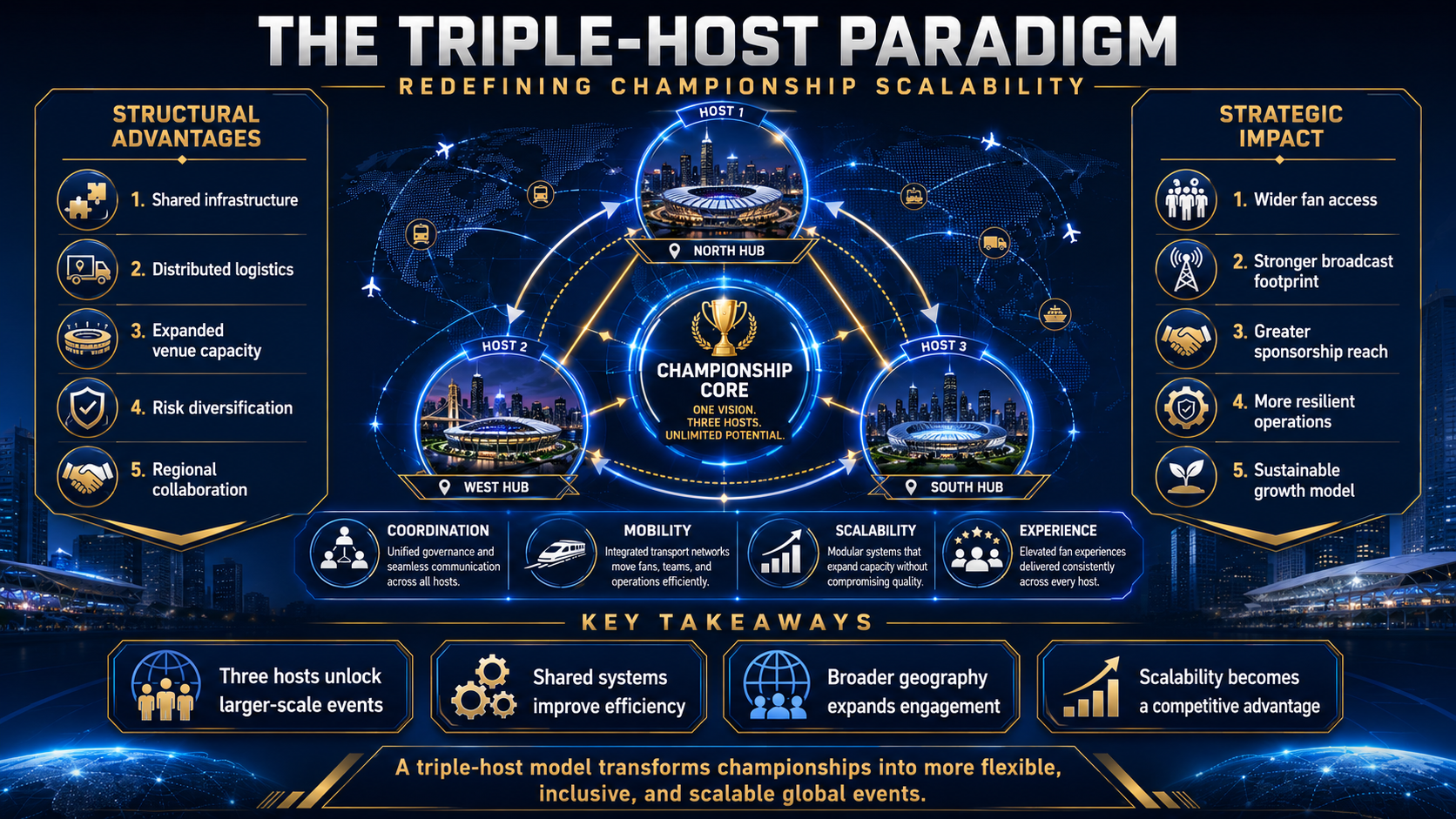
The landscape of international sporting events has shifted toward a more collaborative and expansive model, prioritizing infrastructure utilization and cross-continental engagement. For the first time in history, the championship is being organized jointly by three countries – the USA, Canada, and Mexico. This monumental approach to hosting not only redefines the logistics of global competition but also signals a new era for international sports governance where shared responsibility and diverse cultural integration drive the success of premier athletic events.
Why has the model of co-hosting evolved into a three-nation collaboration?
The shift toward multi-nation hosting is primarily driven by the escalating scale of requirements for modern championships, which necessitate vast infrastructure, stadium capacity, and logistical flexibility that a single nation may struggle to support alone. By distributing the load across three countries, organizers can mitigate the economic burden on individual municipalities while providing a more geographically accessible experience for millions of global fans.
This collaborative strategy ensures that existing stadiums and transport networks are maximized rather than forcing new, potentially underutilized construction. By leveraging the combined resources of North America, the organizers have effectively created a blueprint for sustainability in large-scale event planning, where the focus moves away from “building from scratch” toward “optimizing the existing.”
How will this massive infrastructure be managed across borders?
The management of a three-nation championship requires unprecedented levels of cross-border cooperation in security, customs, transportation, and digital communication networks. This integration is designed to ensure a seamless experience for participants and spectators alike, despite the jurisdictional differences between the involved nations.
What are the projected economic impacts for the hosting countries?
Economic experts anticipate that the combined host status will catalyze significant tourism growth and business development across all three nations. Forecasts suggest a total potential economic impact exceeding $5 billion, bolstered by the influx of international visitors and the secondary spending associated with extended tournament durations.
“Hosting this championship together demonstrates that the power of sport can unify diverse nations through common logistical goals and a shared vision of global hospitality.” — International Sports Strategy Advisor
By stimulating local hospitality, retail, and transportation sectors, the event serves as a long-term economic engine, provided that the hosting cities utilize the influx to build lasting infrastructure improvements.
What are the most significant operational challenges of such a scale?
The primary challenge lies in standardizing the spectator experience and operational protocols across three distinct legal and administrative environments. Aligning standards for health, safety, and venue accessibility is a complex task that involves continuous dialogue between local authorities and international governing bodies to ensure parity for all teams and fans.
How does the triple-host model impact the global fan experience?
The fan experience is drastically expanded by the diversity of cultures and environments provided by three different countries. This variety allows for a more vibrant, inclusive atmosphere that reaches a broader demographic than a single-host event ever could. It also necessitates a robust digital ecosystem that keeps fans updated on match logistics across multiple time zones.
As organizations refine these cross-border frameworks, they are discovering that the triple-host model inherently promotes cultural exchange. Statistics regarding fan mobility suggest that attendees are increasingly likely to visit multiple host cities, thereby increasing the total “fan engagement footprint” of the championship.
What does this mean for the future of international sports?
This event represents a fundamental change in how global bodies view the feasibility of hosting major championships. By proving that the USA, Canada, and Mexico can effectively align their political, logistical, and cultural interests to produce a coherent event, they have set a new benchmark. Future bids will likely be scrutinized on their ability to demonstrate this same level of collaborative planning.
This structure allows smaller or medium-sized cities to be part of the championship, as they don’t need to hold the entire event themselves. It democratizes the hosting process, allowing more regions to showcase their heritage and hospitality on the world stage. Ultimately, the success of this model will determine the direction of athletic event planning for decades to come, moving us toward a more unified and sustainable global sports ecosystem. The integration of three distinct national identities under a single organizational umbrella provides a unique case study in efficiency and cross-cultural partnership, confirming that the future of large-scale events relies on the ability to connect across borders rather than operating within them.