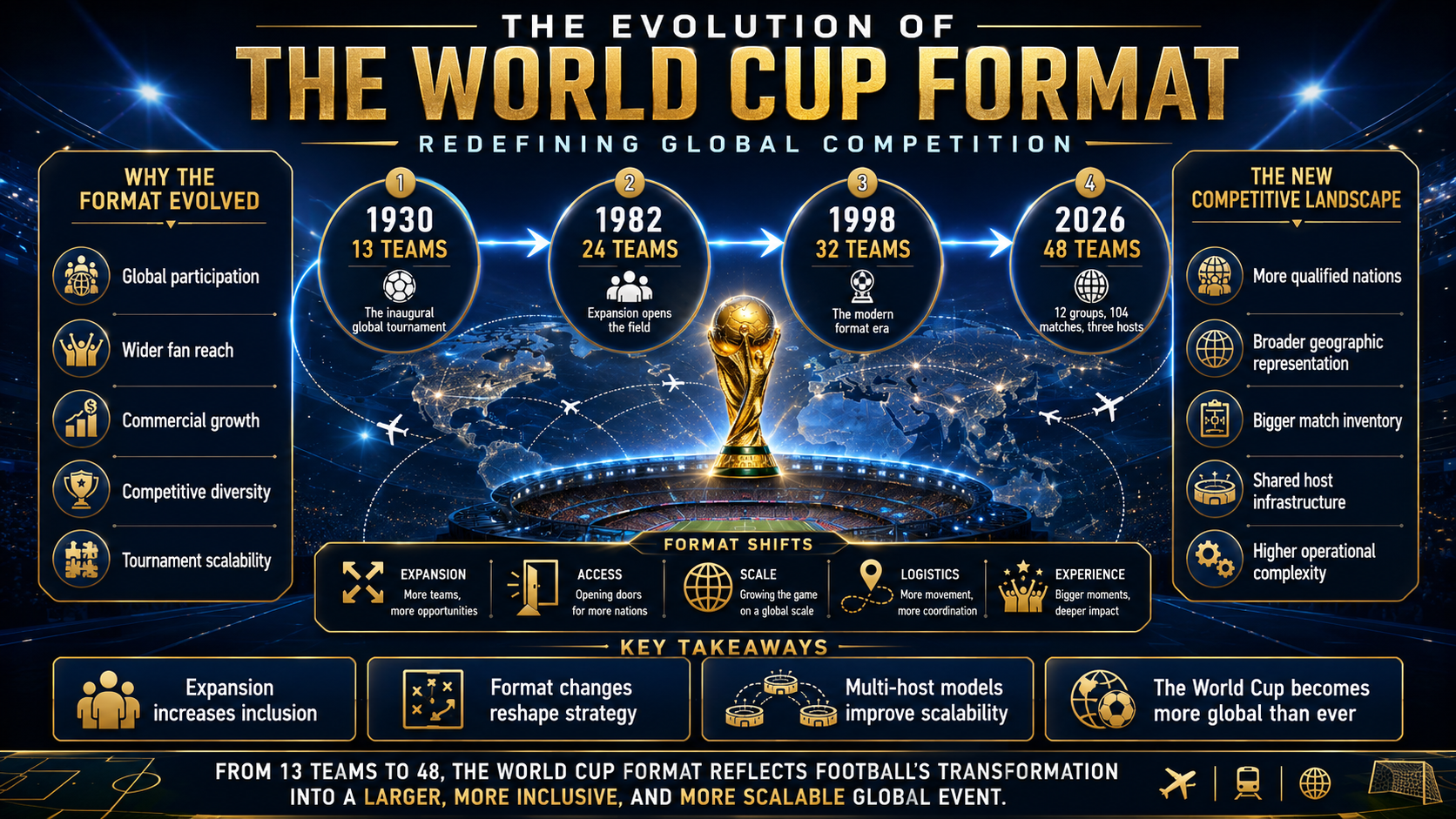
The architecture of international sports is undergoing a transformative shift to accommodate a growing global audience and increased competitive depth. Format: This is the first World Cup with an expanded field of 48 teams (previously 32). The tournament will last for 39 days, and the total number of matches is 104. This radical change marks a departure from traditional structures, setting a new precedent for how major athletic championships will be organized in the coming decade.
Why has the tournament expanded to 48 teams?
The expansion to 48 teams is a calculated move to increase global participation and provide emerging footballing nations with a tangible pathway to the world stage. By moving beyond the static 32-team structure, the governing body aims to diversify the tournament’s demographics, ensuring that continents traditionally underserved in terms of qualification slots receive a more equitable representation.
This expansion does more than just add participants; it fundamentally changes the qualification dynamics and the intensity of the group stages. With more teams competing, the variety of playstyles and tactical approaches is expected to increase significantly, offering a broader spectrum of competition. Strategically, this also drives heightened interest across more broadcast markets, as countries that previously faced near-impossible qualification paths now find themselves within reach of the championship. It is a democratization of the sport that prioritizes breadth and inclusivity, ensuring the championship remains the definitive global event.
How does the shift to 104 matches impact logistics?
A total of 104 matches over 39 days creates a logistical demand that is significantly more complex than previous formats. This requires unprecedented coordination across all host venues to maintain pitch quality, player safety, and efficient transit for both teams and fans.
What are the implications of the 39-day tournament duration?
The 39-day window allows for a more deliberate schedule that balances player recovery with commercial broadcasting requirements. Historically, shorter tournaments forced players into tight recovery cycles, which often impacted the quality of play in the later stages of the competition. By extending the duration, organizers provide the necessary space for squads to maintain peak performance, which is vital given the physical demands of high-level international play.
Furthermore, this extended timeframe provides host cities with a longer period of economic activity. It allows for a more staggered approach to managing local crowds, reducing the immense pressure on public transport and security services that typically peaks during shorter, more concentrated events. Strategically, this longer window also allows for a more varied fan engagement program, ensuring that the tournament is not merely a series of games, but a sustained cultural festival that deepens the connection between host nations and the global audience.
How will this format influence future tactical approaches?
The expanded format introduces a “survival of the fittest” dynamic that will force coaches to reconsider squad depth and rotation strategies. With more games and potentially more grueling paths to the final, the ability of a manager to rotate players effectively without losing competitive edge will become a decisive factor.
Is the 104-match format sustainable for player welfare?
Concerns regarding player fatigue are being addressed through rigorous scheduling and the implementation of advanced sports science protocols. The tournament structure is built to ensure that travel distances for teams are minimized, reducing the cumulative physical toll of moving between host cities.
“Expanding the competition is a recognition of the sport’s global growth, but the priority must always remain the integrity of the performance and the long-term well-being of the athletes.” — Sports Science Consultant
Statistical projections indicate that, despite the increased number of matches, the introduction of advanced recovery facilities and AI-driven load management tools will help teams mitigate the risks associated with the longer tournament timeline.
Preparing for the next generation of football
The structural changes implemented for this championship serve as a bold experiment in modern sports management. By increasing the team count to 48, the governing bodies are betting on the idea that global interest in the sport is broad enough to sustain a tournament of this magnitude. This is not just a change in numbers; it is a change in philosophy. It signals a move toward a model where accessibility, logistical distribution, and sustained engagement are prioritized over the compact, high-pressure models of the past.
As we look toward the future, the success of this 104-match structure will likely provide the data needed to determine whether this format becomes the global standard. It requires a high level of sophistication in how resources are deployed, how fan movement is managed, and how the sport’s core narrative is maintained across three different nations. The ultimate test will be whether the increased volume of games translates to an increase in the quality of the competition, ensuring that every match contributes to the legacy of the sport. By focusing on these elements, the organizers are building a framework that is prepared to handle the demands of a changing global landscape, ensuring that the world’s most significant championship remains both relevant and robust for future generations. The transition from 32 to 48 teams is a significant marker of this evolution, one that will be studied and analyzed for many years to come as the new benchmark for professional international competition.