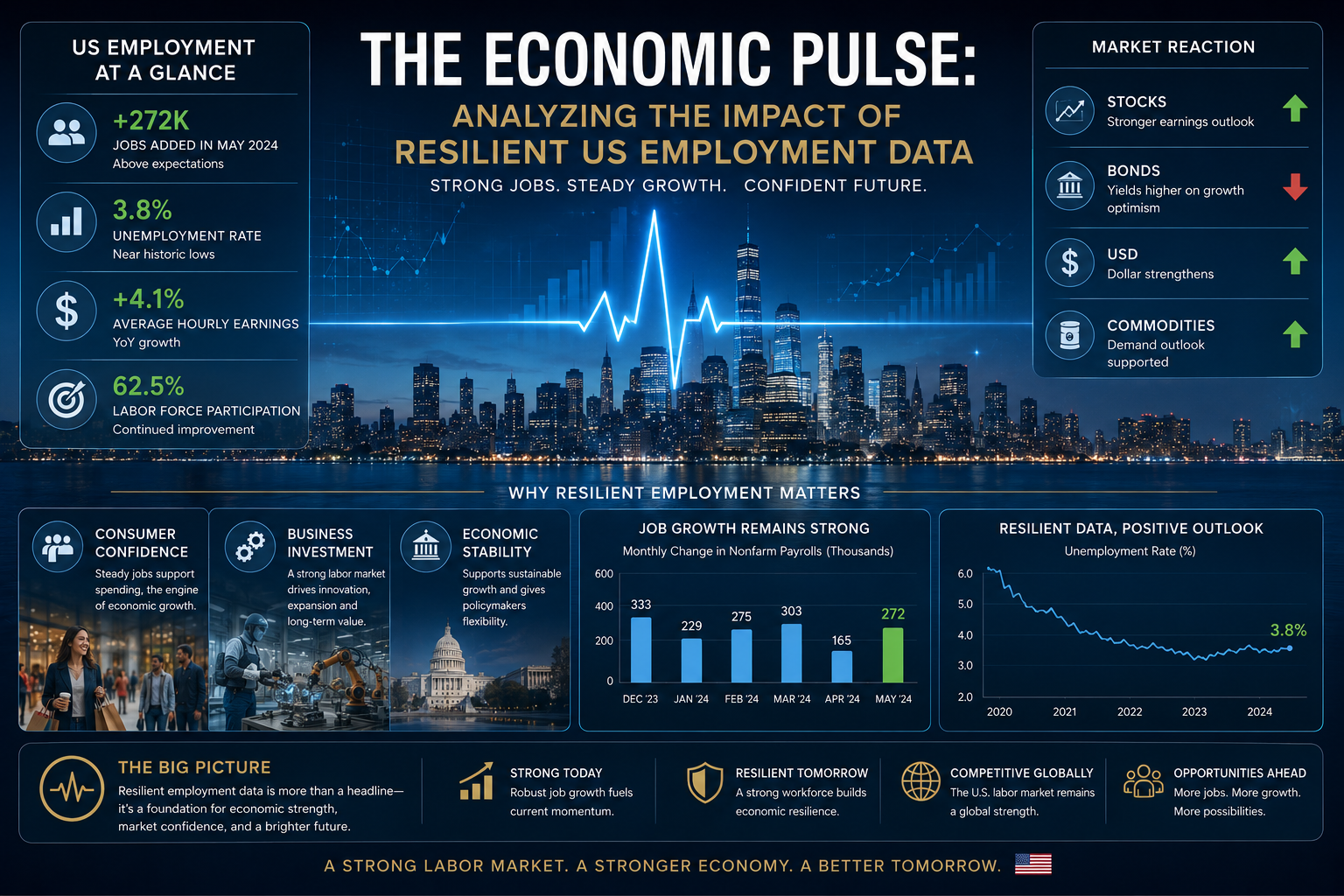
The interplay between labor market health and monetary policy remains the most critical determinant for global financial stability in 2026. Strong US employment data: May data show steady job growth for the third consecutive month. This has strengthened expectations that the Federal Reserve (Fed) will raise interest rates by the end of the year to curb inflation, which led to an increase in US Treasury bond yields. This trajectory indicates that the economy possesses more latent momentum than earlier models anticipated, necessitating a recalibration of market expectations regarding terminal interest rate levels.
What does consistent job growth signal for the broader economy?
Consistent expansion in the labor market is a primary indicator of resilience, suggesting that businesses are continuing to prioritize expansion and talent acquisition despite broader macroeconomic uncertainties. When companies add to their payrolls for three consecutive months, it signals a high level of confidence in sustained consumer demand, which in turn fuels further economic activity and prevents stagnation in key service and industrial sectors.
This trend is not merely a reflection of current hiring needs but serves as a buffer against potential cyclical downturns. For analysts, this data confirms that the American labor force remains a core driver of GDP growth. However, this strength introduces a double-edged dynamic: while it keeps the economy moving, it complicates the Federal Reserve’s mandate to cool down the inflationary pressures that often accompany high employment and rising wage competition.
Why are market expectations shifting toward a Federal Reserve rate hike?
The Federal Reserve is tasked with maintaining price stability, and when labor markets remain tight, the risk of wage-push inflation increases significantly. By signaling a potential hike, the Fed aims to balance the labor market’s exuberance with the necessity of anchoring long-term inflation expectations. This proactive stance is seen as essential to prevent the economy from overheating.
How do rising Treasury yields impact global investment portfolios?
The increase in US Treasury bond yields functions as a gravitational pull for global capital. As the risk-free rate rises, the relative attractiveness of equities and other higher-risk assets diminishes, forcing investors to rebalance their portfolios. This movement often leads to a strengthening of the US dollar and poses a challenge for emerging markets, which may face capital flight as funds chase higher, safer returns within the American debt markets.
For institutional investors, the current yield environment represents a fundamental shift. “When the risk-free rate moves significantly, every other asset class must justify its risk premium,” notes a senior fixed-income analyst. Consequently, investors are shortening the duration of their portfolios to mitigate sensitivity to further rate increases, while simultaneously looking for sectors that demonstrate high pricing power to offset the rising cost of capital.
Is this employment trend sustainable through the remainder of the year?
Projections from leading economic institutions suggest that while job growth will likely normalize in the latter half of the year, it will remain in positive territory. The labor force participation rate is expected to stabilize, which may help alleviate some of the upward pressure on wages.
How can businesses prepare for a higher-rate environment?
Businesses should focus on operational efficiency and debt restructuring. With the cost of borrowing trending upward, reliance on floating-rate debt becomes a significant liability. Leaders are advised to prioritize cash flow management and reduce dependency on external financing where possible, ensuring that the balance sheet is prepared for a sustained period of “higher-for-longer” interest rates.
Furthermore, strategic investment in automation can help maintain margins in an environment where wage growth is likely to remain steady due to the tight labor market. By digitizing key workflows, companies can achieve productivity gains that decouple revenue growth from headcount expansion, providing a hedge against the rising costs of labor and capital.
Conclusion: Adapting to a New Monetary Reality
The strength of the US labor market has effectively shifted the narrative from concerns about recession to concerns about the persistence of inflation. As the Federal Reserve contemplates its next moves, market participants must adapt to an environment where the cost of capital is no longer near zero. Success in the current economic landscape requires a focus on debt quality, operational flexibility, and a deep understanding of how interest rate sensitivity affects different segments of the economy. By remaining objective and monitoring the intersection of employment data and Treasury yields, organizations can better anticipate the shifts in capital flows and position themselves to thrive in a more restrictive monetary era. The resilience displayed by the labor market serves as both a sign of economic health and a reminder that the path to long-term stability requires careful and decisive policy management. Moving forward, the relationship between employment trends and central bank intervention will continue to define the parameters of the investment landscape for the remainder of 2026.