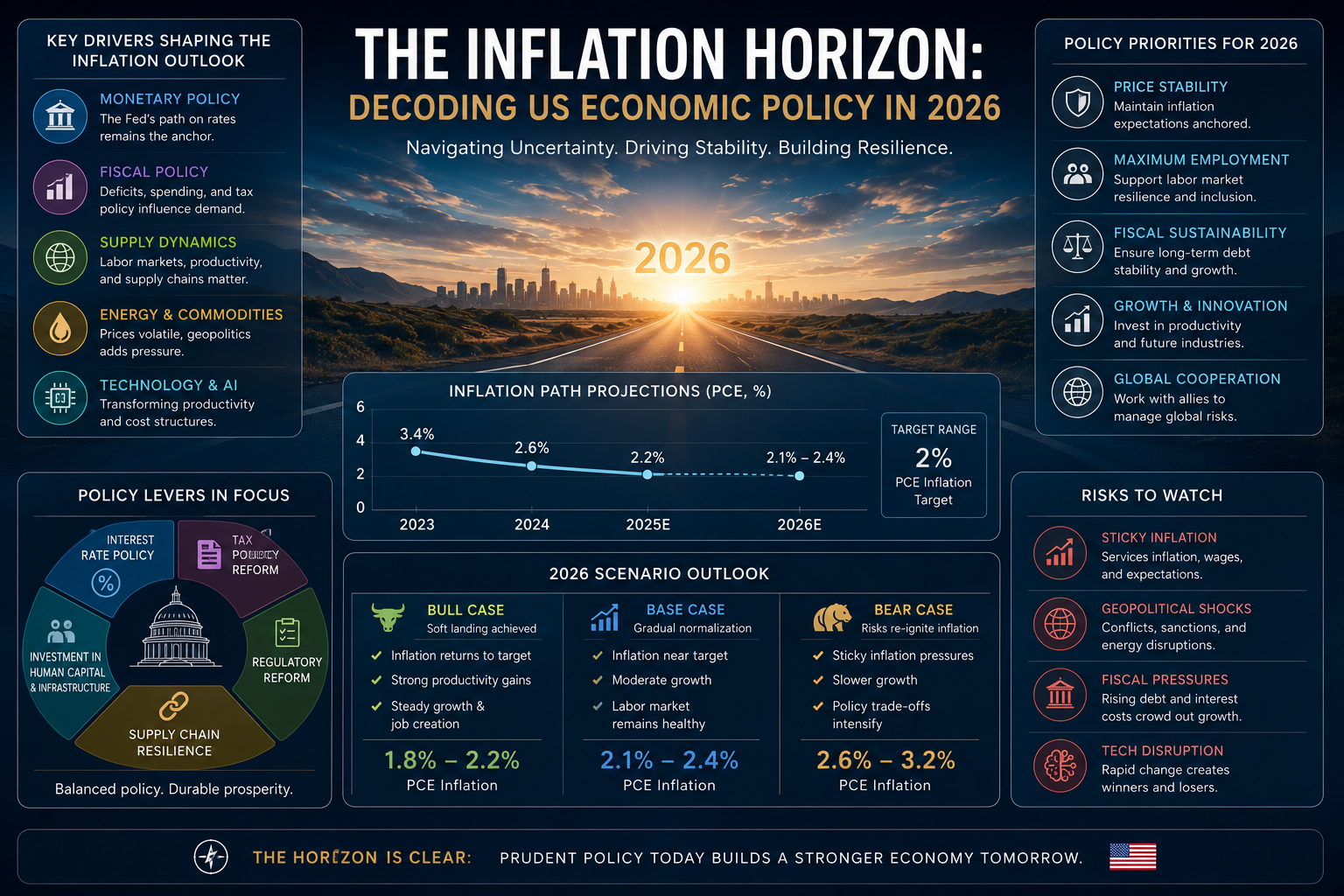
The trajectory of global financial markets is currently tethered to the pulse of American price stability, making high-frequency data releases the primary focus for strategic decision-making. Inflation focus: Analysts are turning their attention to the upcoming US Consumer Price Index (CPI) data for May, which will be key in determining the direction of monetary policy. As the Federal Reserve navigates the complexities of balancing labor market strength with the objective of tempering long-term price increases, the May CPI report serves as the fundamental compass for institutional investors and central bank policy architects alike.
Why is the May CPI report considered the definitive metric for monetary policy?
The May CPI report is crucial because it provides a granular look at the stickiness of core inflation, offering the Federal Reserve the necessary evidence to either maintain its current interest rate path or pivot toward a more hawkish stance. Policymakers require this data to discern whether consumer demand is moderating in line with historical targets or if underlying pricing pressures persist despite restrictive financial conditions.
This particular data release holds significant weight for three primary reasons:
- Trend Identification: It serves as the third major data point in the second quarter, allowing analysts to differentiate between transitory price fluctuations and entrenched inflationary trends.
- Policy Calibration: The Federal Reserve relies on these figures to confirm if the cumulative impact of previous rate adjustments is effectively cooling the economy without inducing a recessionary contraction.
- Market Anticipation: The delta between predicted and actual CPI readings dictates the immediate volatility across asset classes, particularly in the bond and equity markets.
By evaluating the components of the index, from housing costs to service sector expenses, stakeholders gain insight into the efficacy of current fiscal constraints. It is a fundamental benchmark that dictates the cost of capital for businesses and consumers for the remainder of the fiscal year.
How do central banks interpret consumer price fluctuations?
Central banks interpret price fluctuations not merely as historical records, but as indicators of future expectations. If the CPI exceeds projections, it signals that inflationary pressure remains robust, potentially necessitating a preemptive policy response to maintain long-term price stability and safeguard the purchasing power of the national currency.
What are the statistical projections for inflation through late 2026?
Quantitative modeling from independent research firms suggests that while headline inflation may trend toward the 2.5% to 2.8% range by the end of 2026, core inflation remains stubbornly above the target threshold. This disconnect suggests that structural factors, such as supply chain reconfiguration and wage-indexed service costs, continue to exert upward pressure on the CPI.
“The challenge for the central bank is not just identifying where inflation is today, but determining how much of the current price structure is embedded in the long-term cost of doing business. The May data will provide the clarity needed to refine our outlook for the remainder of the year.” — Chief Macroeconomic Strategist
These projections highlight the inherent difficulty in orchestrating a ‘soft landing.’ Markets are currently hedging against the possibility that the Federal Reserve will hold interest rates at elevated levels longer than initially communicated, directly in response to these persistent inflationary forecasts.
What are the risks of misinterpreting short-term CPI volatility?
The danger in overreacting to short-term volatility is the risk of policy error, where a central bank could tighten conditions too aggressively, thereby stifling legitimate economic expansion. Conversely, underestimating a sustained rise in CPI can lead to a ‘de-anchoring’ of inflationary expectations, which is significantly more difficult and costly to reverse once it takes root in the public psyche.
How can businesses adjust their strategy in response to inflationary data?
Businesses should transition from reactive pricing models to proactive, efficiency-led operations. When CPI data indicates rising input costs, the most resilient firms are those that leverage technological automation to maintain margins without disproportionately passing costs to the consumer. This requires a disciplined focus on supply chain transparency and the hedging of essential resource requirements.
Furthermore, capital allocation must be reconsidered. In an environment defined by high-inflation focus, companies with high levels of variable-rate debt should prioritize debt repayment or refinancing to fixed-rate structures before further policy adjustments occur. Strategically, focusing on high-margin products that demonstrate inelastic demand remains the most effective defense against inflationary erosion. By aligning operational expenditures with the realities revealed in the CPI data, firms can safeguard their liquidity and ensure long-term solvency despite the unpredictable nature of macroeconomic shifts.
Conclusion: Synthesizing Data for Long-Term Strategy
The focus on the US Consumer Price Index is a testament to the discipline required for modern financial planning. As the May figures are released, they will be distilled into signals that guide central bank policy, investment allocations, and corporate operational adjustments. While the data is often noisy, the trend it reveals is the bedrock upon which long-term economic strategy is built.
By maintaining a clear, objective view of these developments, market participants can navigate the complexities of 2026 with greater foresight. True strategic success is found not in reacting to a single data point, but in understanding how that point informs the broader narrative of the economy. Whether the result shows a path toward stabilization or a continuation of inflationary pressure, the goal remains the same: to remain agile, informed, and prepared for the evolving realities of the global financial landscape. The data is the beginning of the analysis, not the end.